

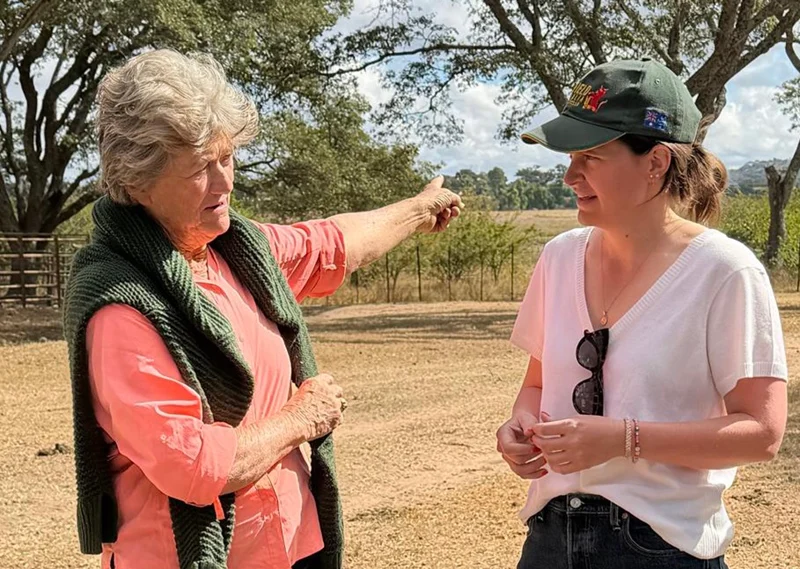
凯特・沃茨(右)走访津巴布韦首位纳菲尔德奖学金女性获得者海伦・洛克的农场时与其合影。
凯特·沃茨在昆士兰州西部奎尔皮附近的牛羊牧场长大,常年出入牛圈的经历让她明白,养殖体系只有在养殖户实际需要时能够正常运转,才具备价值。
凯特现居住于图文巴,就职于澳大利亚农业公司(AACo),负责管理牲畜记录系统,并为全公司业务板块的肉牛产量预测提供支持。正是这种以养殖户需求为首要出发点的理念,支撑着她的纳菲尔德奖学金研究项目。该项目旨在探究养殖户如何借助牲畜记录与溯源工具,做出更高效、更合理的决策。
“如果一套工具不好用,农户就会直接弃用,再也不会碰它”。她说道。
“大家都希望在牧场作业时一切顺利。一旦体验糟糕,人们就不会继续使用这套系统。”
凯特的研究并不侧重于采集更多新数据,而是希望探寻养殖户如何充分利用已有的记录资料,优化日常生产决策。
从北领地到牲畜溯源
在北领地的间隔年经历,让凯特先后在牧场以及活畜出口行业工作了十余年。也正是在那里,她萌生了对牲畜数据与溯源技术的浓厚兴趣。
“我十分痴迷各类数据。能够沿着供应链回溯牲畜的健康状况,这点深深吸引了我。”她说道。
“观察增重以及生产性能相关数据,让我见识到优质信息所能发挥的巨大作用。”
聚焦关键养殖记录
对凯特而言,优化牲畜数据采集并非要生成更多记录,而是帮助养殖户在尚有调整时机时及时做出决策。
“农业领域已经积累了海量数据,但现有数据和实际决策之间存在明显脱节”。凯特表示。
在澳大利亚农业公司(AACo)任职期间,凯特亲眼见证,完善的数据采集能够改善日常牧场管理。超高频电子耳标试验提升了扫描准确率,也让分群作业的处理效率得以提高,印证了实用、可靠系统的价值。
这些经历让她更加坚信一个朴素的道理:采集更多数据不是目标,利用有效数据做出更优决策才是。
凯特指出,良好的数据管理,要从聚焦真正能够支撑管理决策的信息开始。
“不需要把所有信息全部采集”。她说。
“只需关注那些真正能够指导决策的数据。”
她提到,对绝大多数养殖户来说,重点应当放在以下方面:
体重与增重
妊娠及繁育能力
用药处置与牲畜健康记录
牲畜流转信息
借鉴从零搭建溯源体系国家的经验
凯特将借着纳菲尔德奖学金的考察行程前往巴西、苏格兰等正在推行全新牲畜溯源体系的国家。
她并不侧重研究技术本身,而是关注优质数据如何转化为牧场实际决策,以及如何扶持养殖户接纳新系统。
“这些国家正在搭建全新体系,我们正好可以借鉴,看看他们和我们20年前的做法有哪些不同”。她表示。
同时她也希望了解,各国在更换不同耳标技术的过渡阶段,如何保障溯源体系的可靠性。
在凯特看来,技术唯有能够帮助养殖户优化决策、又不增加操作负担,才具备价值。
“争取养殖户的机会只有一两次”。她说。
“倘若系统在牧场作业现场失灵、拖慢工作效率,养殖户就会直接退回纸笔记录的老办法。”
凯特希望通过本次海外考察,找到切实可行的方法,帮助养殖户从已有采集数据中挖掘更多价值。
从事牲畜数据与溯源系统相关工作多年,她认为评判每一项新工具,都可以用一个简单问题衡量。
“这项技术是服务养殖户、为养殖户所用,还是反过来让养殖户迁就技术?”
“这才是真正的难题”。她说道。
消息来源:MLA
Practical ways to make better on-farm decisions
Kate Watts (right) with Helen Locke, Zimbabwe’s first female Nuffield scholar, whilst on a visit to her farm.
Growing up on a sheep and cattle property near Quilpie in western Queensland, Kate Watts has spent enough time in cattle yards to know livestock systems are only useful if they work when producers need them.
Now based in Toowoomba, Kate works with the Australian Agricultural Company (AACo), managing livestock record systems and supporting cattle forecasting across the company's operations. It's this producer-first perspective that underpins her Nuffield Scholarship, which is exploring how producers can use livestock records and traceability tools to make faster, more informed decisions.
"If something doesn't work, a farmer will throw it against the wall and never use it again," she said.
"You want to be in the yards and have everything go smoothly. As soon as it doesn't, people won't use it."
Rather than focusing on collecting more information, Kate wants to understand how producers can make better use of the records they already have to improve day-to-day decision making.
From the Territory to traceability
A gap year in the Northern Territory turned into more than a decade working on stations and in the live export industry. It was there that Kate's fascination with livestock data and traceability began.
“I just loved all the data. Being able to trace animal health back through the supply chain really interested me,” she said.
“Watching weight gains and performance data showed me how powerful good information could be.”
Focus on the records that matter
For Kate, collecting better livestock data isn’t about creating more records. It’s about helping producers make decisions while they still have time to act.
"We already have a huge amount of data in agriculture, there's just a real gap between what we've got and how the decisions are made," Kate said.
Through her role with AACo, Kate has seen firsthand how better data collection can improve everyday management. Trials using UHF tags have increased scan accuracy and made mob-based processing more efficient, demonstrating the value of practical, reliable systems.
Those experiences reinforced a simple lesson: collecting more data isn't the goal. Using the right data to make better decisions is.
Kate points out that good data management starts with focusing on the information that genuinely supports management decisions.
"You don't need to capture everything," she said.
“You just need to focus on the information that actually drives decisions.”
For most producers, she says that means focusing on:
weights and weight gain
pregnancies and fertility
treatments and animal health records
livestock movements.
Learning from countries starting fresh
Kate's Nuffield travels will take her to countries including Brazil and Scotland, where new livestock traceability systems are being introduced.
Rather than studying the technology itself, she's interested in how better data is translated into practical on-farm decisions and how producers are supported to adopt new systems.
"They're building new systems now, so there's a real opportunity to learn how they're doing it differently to how we did it 20 years ago," she said.
She also wants to understand how countries are managing the transition between different tagging technologies while maintaining confidence in their traceability systems.
For Kate, technology is only valuable if it helps producers make better decisions without adding complexity.
"You only get one or two chances with producers," she said.
"If a system drops out in the yards or slows people down, they'll go straight back to pen and paper."
Kate hopes her travels will identify practical ways to help producers get more value from the information they're already collecting.
After years working with livestock data and traceability systems, she believes every new tool should be judged by one simple question.
"Does the technology support producers and work for them, or is it the other way round?
"That's the real challenge,” she said.
Source:MLA

