

核心要点
现金利率上调至4.60%,创2011年以来新高。
利率走高,进一步推高畜牧养殖本已处于高位的投入与运营成本。
对养羊户而言,融资成本上升会增加母畜留存、牲畜采购以及长期饲养的开支。
澳大利亚储备银行本周将现金利率上调25个基点至4.60%。这是2026年第四次加息,利率达到2011年以来最高水平。
尽管养殖户曾经经历过相近水平的利率环境,但当前整体畜牧生产环境已截然不同。
2011年,现金利率全年大部分时间维持在4.75%,同年11月澳洲联储开启降息周期。
与之相对,当前4.60%的现金利率自2026年初以来已累计上调1个百分点,本次加息反映通胀与成本压力仍在持续。
成本攀升,成为重要考量因素
对养殖户而言,利息是本已高昂的农场运营成本中新增的一项开支。
澳大利亚农业资源经济局(ABARES)数据显示,2024–25财年,养羊场平均现金成本约28.6万澳元,其中利息支出约2.1万澳元。
利息约占现金总成本的7.5%。
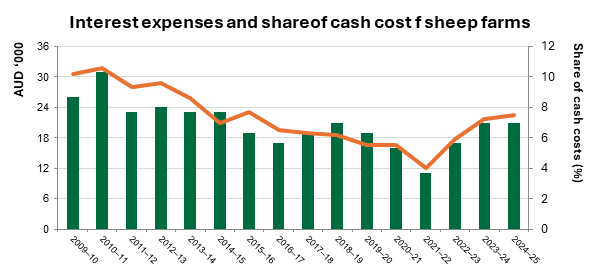
资料来源:澳大利亚农业资源经济局农场数据门户;数据为单个养羊场平均值。
加息带来的影响不止现有长期债务的还款额。
流动资金、牲畜采购以及饲养牲畜直至出栏销售所需的其他运营开支,同样依赖融资支持。
从更广范围看,农业债务既用于维持农场日常运营,也支撑土地、农机设备等长期投资。
养殖户打算留存更多牲畜时,利率带来的影响尤为突出。
留存后备母羔或繁育母畜,意味着放弃即时销售收入,同时还要持续承担饲喂、动物防疫与管护成本,等待牲畜产生收益。
购入额外繁育母畜可以更快扩大存栏规模,但需要更多前期资金,在牲畜价格高企阶段更是如此。
如果这类决策依靠贷款实施,加息会抬高牲畜存栏与采购两项成本。
若银行完全传导加息,每100万澳元贷款,25个基点的加息将增加约2500澳元的年利息。
2026年现金利率累计上调1个百分点,对应每100万澳元贷款,年利息增加约10000澳元。
与2011年截然不同的养羊行业周期
时机对养羊行业至关重要。
澳大利亚统计局(ABS)数据显示,历经数年恶劣气候与高出栏量后,截至2025年6月,全国羊群存栏量为6600万头。
近期,澳大利亚南部大范围降雨改善了草场条件,提振养殖户信心。
供应偏紧叠加价格坚挺,助推母畜留存与补栏需求。
养殖户做决策时,利率的影响一般不会超过气候条件、饲草供给以及牲畜预期收益。
但融资成本抬高,提升了扩群门槛,或将影响养殖户选择:是留存现有母畜、外购牲畜,还是放缓节奏逐步扩群。
当前现金利率虽和2011年相近,但2026年牲畜养殖的融资成本持续走高。
因此,养殖户的负债规模、现金流以及预期收益,将在留存、采购与饲养牲畜的决策中愈发关键。
信息来源:澳大利亚肉类与畜牧业协会高级市场信息分析师 埃米利亚诺·迪亚斯
信息截至2026年10月1日成文时准确有效
澳大利亚肉类与畜牧业协会(MLA)不对本刊物所载任何信息的准确性、完整性及时效性作出任何保证。用户使用或依赖本刊物任何内容,风险自行承担;因使用或依赖相关信息所造成的任何损失与损害,MLA概不承担任何责任。未经MLA事先书面许可,本刊物任何内容不得擅自转载、复制。凡使用MLA刊物、报告及相关信息,均须遵守MLA市场报告及信息使用条款。
消息来源:MLA
What the highest cash rate in more than a decade means for producers
Key points
The cash rate has increased to 4.60%, its highest level since 2011.
Higher interest rates are adding to already elevated input and operating costs across livestock production systems.
For sheep producers, increased financing costs can raise the cost of retaining females, purchasing stock and carrying animals for longer periods.
The Reserve Bank of Australia (RBA) increased the cash rate by 25 basis points to 4.60% this week. It’s the fourth-rate rise of 2026 and the highest level since 2011.
While producers have operated in interest rate environments at similar levels previously, the broader livestock production environment is markedly different.
In 2011, the cash rate remained at 4.75% for most of the year before the RBA began cutting rates later in November of the same year.
In contrast, today’s 4.60% cash rate follows a one percentage point increase since the start of 2026, with the latest decision reflecting continued inflation and cost pressures.
Higher costs build into the equation
For producers, interest is another cost within an already substantial farm operating cost base.
ABARES data highlighted sheep operations recorded average cash costs of approximately $286,000 in the 2024–25 financial year and included approximately $21,000 in interest expenses.
Interest accounted for around 7.5% of total cash costs.
Source: ABARES Farm Data Portal; Average per sheep farm.
Higher rates affect more than repayments on existing long-term debt.
Finance is also used for working capital, livestock purchases and other operating expenses required to carry animals through to sale.
More broadly, agricultural debt supports both ongoing farm operations and longer-term investment in land, machinery and equipment.
This becomes particularly relevant when producers choose to hold more livestock.
Retaining ewe lambs or breeding females means foregoing immediate sale income while continuing to incur feed, animal health and management costs before those animals generate a return.
Purchasing additional breeding stock can increase numbers more quickly, but requires greater upfront capital. Particularly when livestock prices are strong.
Where these decisions are debt-funded, higher rates increase the cost of both holding and purchasing livestock.
A 25-basis-point increase adds approximately $2,500 in annual interest for every $1 million borrowed, if fully passed through by lenders.
Across the one percentage point increase in the cash rate during 2026 that equates to approximately $10,000 per $1 million borrowed.
A different sheep cycle than 2011
The timing is important for the sheep industry.
According to the Australian Bureau of Statistics (ABS), the national flock was at 66 million head by June 2025 following several years of difficult seasonal conditions and elevated turn-off.
More recently, widespread rainfall across southern Australia has improved pasture availability and producer confidence.
Tight supply and strong prices have supported greater retention and restocker demand.
Interest rates are unlikely to outweigh seasonal conditions, feed availability or expected livestock returns in producer decisions.
However, higher financing costs raise the hurdle for increasing numbers and may influence whether producers retain existing females, purchase additional stock or increase numbers more gradually.
The cash rate may be similar to 2011, but the cost of financing livestock has increased throughout 2026.
For producers, debt exposure, cashflow and expected returns will therefore play an increasingly important role in decisions to retain, purchase and carry livestock.
Attribute content to: Emiliano Diaz, MLA Senior Market Information Analyst.
Information is correct at time of writing on 1 October 2026.
MLA makes no representations as to the accuracy, completeness or currency of any information contained in this publication. Your use of, or reliance on, any content is entirely at your own risk and MLA accepts no liability for any losses or damages incurred by you as a result of that use or reliance. No part of this publication may be reproduced without the prior written consent of MLA. All use of MLA publications, reports and information is subject to MLA’s Market Report and Information Terms of Use.
Source:MLA

