

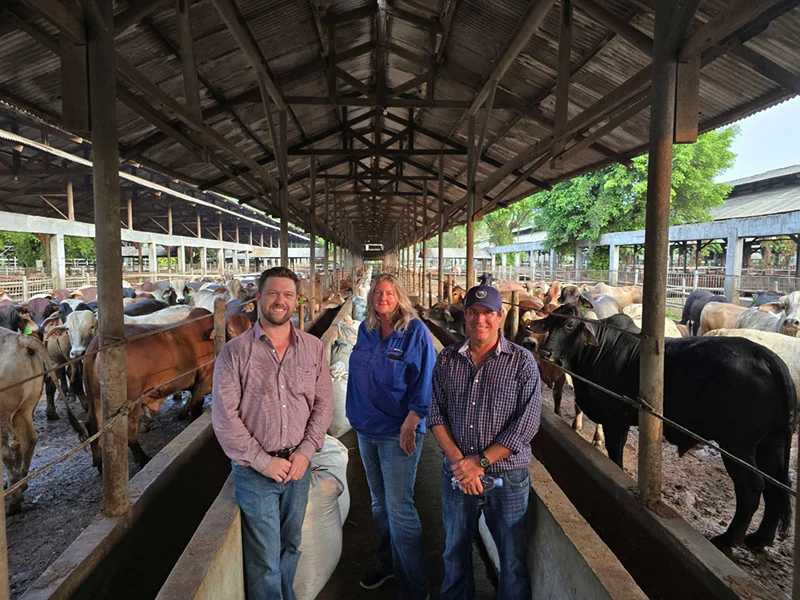
北领地养殖户特鲁迪·奥克斯利、山姆·麦克宾,与印尼畜牧业务总经理杰克·韦伯在布拉曼·佩尔卡萨·森托萨育肥场合影。
图片由供稿方提供。
北领地养殖户及行业代表近期赴印尼实地考察当地肉牛养殖与育肥业务,旨在深化合作,增进各方对活牛出口供应链的共识。
本次考察团由澳大利亚肉类与畜牧业协会(MLA)及北领地肉牛协会(NTCA)支持,帮助养殖户了解其牛只运抵印尼后的后续情况。
考察团走访了楠榜、万丹以及西爪哇的育肥场与屠宰厂。
澳大利亚肉类与畜牧业协会印尼及亚太贸易与市场准入经理斯宾塞·惠特克表示:“我们的印尼供应链合作伙伴十分热情,乐见澳大利亚肉牛养殖户主动交流,助力他们理解这项贸易。”
“想要充分了解印尼的蛋白市场格局,实地考察是最好的方式。”
“参与本次行程的养殖户对所见的动物福利水平、场地规模、投入力度以及运营专业性印象深刻。”
重要市场
印尼是澳大利亚北部众多肉牛养殖户的重要出口目的地。而印尼本土可持续养殖空间有限,活牛进口为其提供了重要的肉牛及蛋白来源。
2025年,约58.3万头肉牛通过活牛贸易从澳大利亚出口至印尼市场。
考察团养殖户特鲁迪·奥克斯利表示,印尼是其家族牧场奥克斯利放牧牧场的核心市场,几乎承接了牧场全部业务。
该牧场向活牛出口市场供应婆罗门公牛,实地走访整条分销链条对特鲁迪而言意义重大。
“原本以为自己对供应链运作已有不错了解,但只有亲身来到当地,才能明白当地文化与环境如何影响整条供应链。”她说。
“我看到牛只在屠宰场外状态平稳,现在能够想象我的牛只在印尼所处的环境。”
考察团走访了楠榜的大巨人畜牧(GGL)与Juang Jaya Abdi Alam(JJAA)育肥场,两家育肥场合计为当地创造数千个就业岗位。
特鲁迪称,实地探访育肥场,让她更加理解澳印尼活牛出口贸易带来的社会经济效益。
“我认识到活牛出口贸易在带动当地就业方面发挥着十分重要的作用。”她说。
成本管控
养殖户了解到的核心信息之一:受牛只高价、投入品涨价以及汇率不利因素影响,部分印尼经营主体利润微薄。
育肥场经营者还提到,印尼监管部门对活牛销售设置价格上限,令其难以转嫁成本。
“此前我们并不清楚,除澳大利亚牛价上涨之外,当地本币兑美元走弱带来的影响。”特鲁迪说。
特鲁迪有意和印尼加工企业建立更深度的直接商贸合作,让供应链各环节共同受益。
“读懂客户需求,我们就能提供更适配的牛只,助力对方提升利润;同时我们也能更好规划供货,提升自身经营效率。”她说。
深化合作关系
北领地肉牛协会顶端分会主席、北领地养殖户山姆·麦克宾表示,印尼经营方积极对接考察团,充分体现了这项贸易合作的价值。
“政府与行业主管部门持续沟通,有助于进一步稳固贸易关系。”他说。
“我非常希望我们企业每年都能派人前往印尼。”
考察团与印尼畜牧与兽医总署(DGLAHS)会面,对方重申澳大利亚是重要合作伙伴。
“各方都认可澳洲牛只在印尼供应链中的重要地位,但我们不能固步自封。”斯宾塞说道。
“我们要保障整条供应链具备盈利空间、高效运转,从而实现长期向好发展。”
打通反馈渠道
斯宾塞称,本次考察最重要的收获之一,是完善澳洲养殖户与印尼经营主体之间的反馈机制。
“目前印尼反馈给澳洲养殖户的信息十分有限,但育肥场可以采集相关数据,这为完善反馈渠道创造了空间。”他说。
他提到,养殖户可借助澳大利亚肉类与畜牧业协会(MLA)搭建的渠道,推动与印尼育肥场之间的信息互通。
消息来源:MLA
What NT producers learned inside Indonesia's cattle supply chain
NT producers Trudi Oxley and Sam McBean with Indonesia Livestock Operations General Manager Jack Webb at the Brahman Perkasa Sentosa Feedlot. Image supplied.
A group of NT producers and industry representatives recently travelled to Indonesia for a first-hand look at the country’s cattle and feedlot operations, to boost ties and grow their shared understanding of the live export supply chain.
The delegation, supported by MLA and the Northern Territory Cattlemen’s Association (NTCA), equipped producers with a better understanding of what happens to their cattle in Indonesia.
Producers visited feedlots and abattoirs in Lampung, Banten and West Java.
“Our Indonesian supply chain partners were very welcoming and pleased to see engagement from Australian cattle producers to help them better understand the trade,” MLA’s Indonesia and Asia Pacific Trade and Market Access manager Spencer Whitaker said.
“To fully understand Indonesia’s protein landscape there’s nothing better than seeing it with your own eyes.
“Producers on the tour were impressed with the animal welfare outcomes they saw, as well as the size, investment and professionalism of the operations.”
Important market
Indonesia is a key destination for many northern Australian beef producers, while for Indonesia – which has limited space to sustainably produce its own herds – live export provides an important supply of cattle and protein.
In 2025, about 583,000 head of cattle entered the Indonesian market from Australia through live trade export.
One of the producers on the delegation, Trudi Oxley, said Indonesia was a crucial market for her her family’s operation Oxley Grazing and accounted for nearly 100% of their business.
They supply Brahman steers to the live export market, so seeing the distribution chain in action was invaluable for Trudi.
“You think you have a reasonable understanding of how the supply chain works but it’s not until you actually get to a country that you understand how the culture and conditions shape it,” she said.
“I’ve seen how calm the animals are outside the abattoirs and can now visualise the conditions my cattle are in when they are in Indonesia.”
The delegation visited the Great Giant Livestock (GGL) and Juang Jaya Abdi Alam (JJAA) feedlots in Lampung which between them provide thousands of domestic jobs.
Trudi said seeing the feedlots firsthand helped her appreciate the socio-economic impact of the Australian-Indonesia live export trade.
“I gained an understanding of how important the live export trade is as an employer of local people,” she said.
Managing costs
One of the central messages producers heard was that some Indonesian operators faced thin profit margins due to high cattle prices, input price rises and a poor exchange rate.
Lotfeeders also shared how price caps placed on live cattle sales by Indonesia’s regulatory authority has limited their ability to pass on costs.
“We didn’t understand the impact of having a weaker local currency against the US dollar, on top of increasing Australian cattle prices,” Trudi said.
Trudi is now interested in forming a greater business-to-business relationship with Indonesian processors, to benefit all links in the supply chain.
“By understanding the customer, we can better prepare cattle for them so they have better margins and we can get more efficiency in our business by being able to better plan supply,” she said.
Building the relationship
NTCA Top End Branch chair and NT producer Sam McBean said the eagerness of Indonesian operators to meet with the delegation emphasised the value of the trade relationship.
“Ongoing dialogue between government and industry officials will help to further strengthen the trade,” he said.
“I’m really keen to send someone from our business to Indonesia each year.”
The delegation met Indonesia’s Directorate General of Livestock and Animal Health Services (DGLAHS), who reinforced Australia’s important partnership.
“There is recognition that Australian cattle are an important part of the system in Indonesia, but we can’t rest on our laurels,” Spencer said.
“We need to ensure the supply chain is profitable and running as efficiently as possible to achieve positive outcomes over the long-term.”
Opening the door to feedback
Spencer said improving the feedback loop between Australian cattle producers and Indonesian operators was a key takeaway from the tour.
“Currently, there’s limited feedback to Australian producers from Indonesia, but with data collected in feedlots, there is opportunity to grow this,” he said.
He said producers can encourage information sharing with Indonesian lotfeeders by engaging with opportunities through MLA.
Source:MLA

