

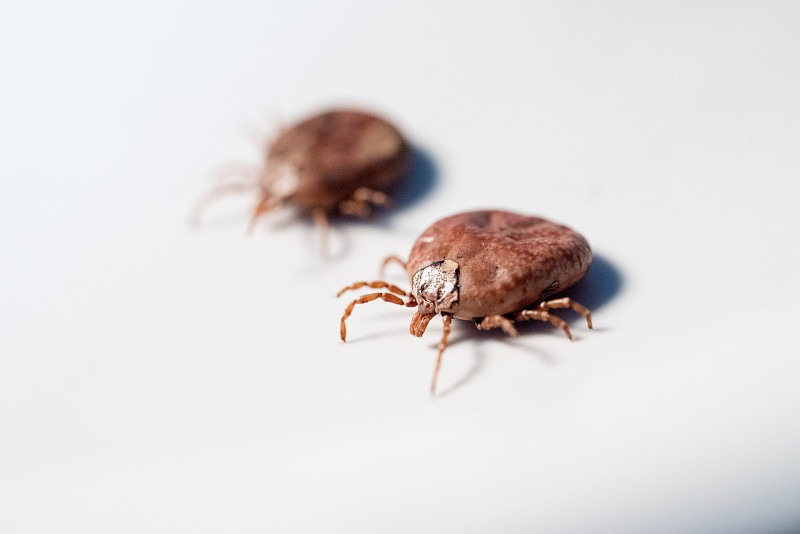
牛蜱和水牛蝇被认定为澳大利亚红肉产业成本最高的两类地方性疫病问题两者合计造成 3 亿澳元的经济损失在澳大利亚北部地区情况尤为严重。
随着水牛蝇不断向南部进一步扩散,且对现有防控手段的抗药性持续增强,若不采取干预措施,相关经济成本或将进一步攀升。
澳大利亚肉类及畜牧业协会资助的相关研究正在开展,旨在研发可同时防治这两种虫害的新型杀虫剂,同时将对蜜蜂、蜣螂等益虫的危害风险降至最低。
悉尼大学乔尔・麦凯教授及其团队,正借鉴人类药物研发中的前沿技术来开发这类杀虫剂。
乔尔表示:“人类药物研发的核心原理,是先找出引发问题的特定单一蛋白质,再研发一种分子,使其结构能够嵌入该蛋白质的空腔中,抑制其活性,就像一把尺寸精准的扳手卡住运转部件一样。”
“牛蜱体内有数千种功能各异的蛋白质。我们选定了一种对牛蜱生存至关重要的蛋白质作为靶点,目前正着手设计可抑制其活性的分子。”
这项为期五年的研究项目,将对约 20 万种分子开展试验,并筛选出最具潜力的品种,精准优化结构以适配牛蜱靶向蛋白质。
他称:“与此同时,我们还会评估这些备选分子是否会抑制蜣螂和蜜蜂体内同类蛋白质的活性。”
“我们将选用仅能定向抑制牛蜱蛋白质的分子推进后续研发。”
这套研发流程也将同步应用于水牛蝇的防治研发。
乔尔称:“大多数杀虫剂存在一个通病,其靶向蛋白质在牛蜱和蜣螂体内结构相近,因此很难找到只针对牛蜱起效的分子。”
“这也是多数杀虫剂属于广谱药剂、无法实现定向灭杀的原因。”
“我们选定的靶向蛋白质,在各类昆虫、蜱虫等生物体内存在细微结构差异,这也让我们有机会研发出只针对有害虫害的专用分子药剂。”
投入更多防控产品上市:
淋浇剂、药浴剂、喷雾药剂以及杀虫耳标,均是常用于缓解牛蜱和水牛蝇危害的防控手段。
2025 年 9 月,出于健康与安全考量,广泛使用的二嗪磷杀虫剂已被逐步淘汰,造成两类虫害的可用杀虫剂出现供应缺口。
该项目结束后,乔尔及其团队希望为研发更安全、更环保的杀虫剂,提供一套通用研发方法的概念验证。
乔尔表示:我们也正在试验这套研发思路,将其应用于其他农业领域及医药领域,包括防治瓦罗亚螨和疟蚊,同时不伤害其他有益昆虫。
我们十分期待研发出药效强劲、安全且具有靶向选择性的新型杀虫剂。
消息来源:MLA
$300m pest problem meets a new solution
Cattle tick and buffalo fly have been identified as the two highest-cost endemic disease issues for the Australian red meat industry – combined, they’re a $300 million problem, particularly in northern Australia.
With reports of the buffalo fly spreading further south and rising resistance to current controls, the cost is likely to grow without intervention.
MLA-supported research is underway to develop new pesticides to combat both pests, while minimising the risk for beneficial insects such as bees and dung beetles.
Professor Joel Mackay of The University of Sydney and his team are developing the pesticides using the same cutting-edge strategies applied in human pharmaceutical development.
“The principle behind human drug discovery is to identify the individual protein which is causing the issue and then inhibit its activity by developing a molecule with a shape that is sculpted to wedge into a cavity in the protein – a precisely shaped spanner in the works,” Joel said.
“A tick has thousands of different proteins that do many different jobs. We have chosen as our target a protein that is essential for the tick’s survival and we are now working on the design of a molecule to inhibit its activity.
During the five-year project, around 200,000 molecules will be trialled and the most promising ones will be carefully honed to fit into this cattle tick protein.
“At the same time, we will be assessing whether these candidate molecules also inhibit the activity of the corresponding protein in dung beetles and honeybees,” he said.
“We will be advancing with the molecules that selectively inhibit the cattle tick protein.”
The same process will be used to target the buffalo fly.
“The issue with most insecticides is that the protein that they target has a similar shape in the cattle tick and dung beetle, so it’s difficult to find a molecule that will only impact the tick,” Joel said.
“That’s why a lot of insecticides are broad spectrum, rather than selective.
“Our protein target is subtly different between different types of insects, ticks and so on, meaning that we have the opportunity to find molecules that are selective for the bad guys.”
Bringing more control to market
Pour-ons, dips, sprays and insecticidal ear tags are all commonly used to help combat the impact of cattle ticks and buffalo flies.
In September 2025, the widely-used insecticide Diazinon was phased out due to health and safety concerns, leaving a gap in insecticides for both pests.
Following the project’s conclusion, Joel and his team hope to provide a proof-of-concept for a generic approach to the development of safer and more environmentally friendly insecticides.
“We’re also trialling this approach to assist in other agricultural industries and in medicine, including suppressing Varroa mite and the malaria mosquito without harming other, beneficial insects,” Joel said.
“We’re really excited about the prospect of making a pesticide that is not only potent, but safe and selective.”
Source:MLA

