

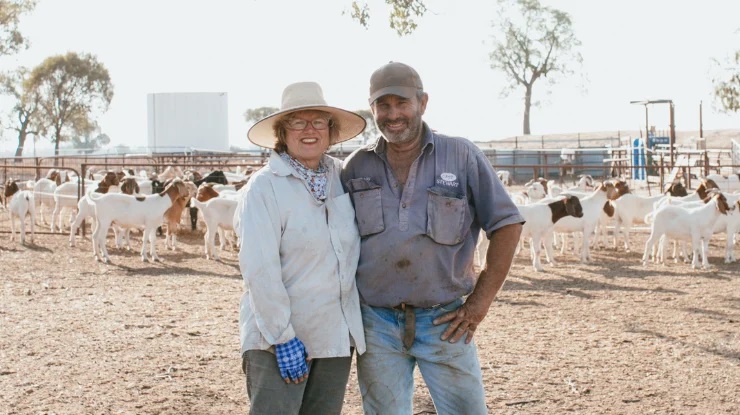
山羊虽是斯图尔特家族三代农场经营中新近新增的品类,但克雷格与乔对这类牲畜的喜爱、以及对行业的热忱,已然迅速成为 “英格尔伍德” 农场生活的核心。图片来源:克兰西・佩恩
山羊肉能否重塑澳大利亚熟食市场格局?这款挑战猪肉行业的 100% 山羊肉萨拉米,背后故事如下。
新南威尔士州中西部养殖户克雷格・斯图尔特与乔・斯图尔特夫妇,当初只为给年仅 8 岁的女儿养一只宠物,将一头波尔山羊幼崽引入自家农场。彼时的他们未曾料到,这一举动竟引发连锁发展,最终撼动了整个肉制品品类格局。
时隔近二十年,打造出 “美食山羊夫人” 品牌的夫妇二人,凭借精细化养殖管理、优质种群基因把控与持续完善的供应链物流,成功树立高端品牌。其推出的纯山羊肉萨拉米,已在风干肉制品市场中与猪肉制品分庭抗礼。
农场简介
经营者:克雷格·斯图尔特、乔·斯图尔特——新南威尔士州科利镇,英格尔伍德农场
占地面积:1040公顷
经营项目:800头波尔母山羊、50头海福特母牛,附带部分农作物种植
草场类型:原生草场、苜蓿类牧草及饲料作物
土壤类型:灰色黏壤土、红黏土、砂壤土
年均降雨量:500毫米
情有独钟山羊产业
上世纪 90 年代,克雷格与乔接手家族三代经营、位于新南威尔士州科利镇的英格尔伍德农场时,二人本无意改变这家已有百年历史的肉牛与农作物种植业务。
此后他们又将吉尔甘德拉的布埃纳维斯塔农场纳入经营版图。2008 年,夫妇二人带着女儿艾比前往布埃纳维斯塔附近,拜访当地一家山羊种畜养殖场友人时,对方赠予了一只不适宜繁育生产的母山羊,名叫奥利维亚。
乔表示:“女儿一下子就喜欢上了这只山羊。由于它不符合种畜标准,养殖场主也乐意让我们把它带回家。”
“奥利维亚是我们第一次接触山羊。它性子活泼还有点霸道,但十分惹人喜爱,我们不知不觉就喜欢上了这类牲畜。”
自此之后规模迅速扩大,他们又购入 10 头波尔母山羊,并引进一头种公山羊。到 2009 年,克雷格和乔已经从孤零零的一只山羊,发展成了完整的养殖种群。
走进 “美食山羊夫人” 品牌
尽管已经建起成熟的山羊种群,斯图尔特夫妇起初并未打算将山羊养殖做成商业化产业。
2009年一次家庭度假,事情出现转机。乔走进当地一家肉铺,看到牛肉碎售价高达每公斤15澳元,倍感震惊。
乔说:“当时我们主要精力都放在种植业和肉牛业务上。”
“站在肉铺里我就在想,有人在靠肉制品赚钱,而我们却没有分到一杯羹。这让我萌生了打造自有品牌牛肉产品的想法。”
之后夫妇二人找来商业顾问探讨这个思路,对方一句简单的提问彻底改变了他们的规划:那你们的山羊产业为什么不做?
为了解澳洲本土市场是否真的有养殖山羊肉的消费需求,斯图尔特夫妇委托开展了可行性研究,调研人群的山羊肉消费群体、消费频次及食用场景。
调研发现,山羊肉是全球食用范围最广的红肉,在众多饮食文化中都有悠久食用传统;但在澳大利亚,高品质养殖山羊肉(尤其是波尔山羊)依旧供给稀缺。
澳洲产出的山羊肉超90%来自牧场野山羊(也叫野生或野化山羊),且大部分用于出口。斯图尔特夫妇由此意识到,自家的养殖山羊肉具备巨大市场潜力。
乔表示:“我们2010年第一次品尝山羊肉。”
“先试吃了野山羊肉,之后又尝了波尔山羊肉,那一刻我们就知道,这会是一款极具竞争力的产品。”
同年,乔参与了澳大利亚肉类与畜牧业协会(MLA)最后一届从牧场到餐桌联合营销项目,随后又加入协会的产品与包装创新计划。也正是这段经历,让她一步步成长为被消费者冠以“美食山羊夫人”名号的行业从业者。
农场经营思路悄然转变
就在乔牵头开拓市场、研发食谱与挖掘产品商机的同时,克雷格则在幕后悄然重构生产体系。他打造了专属化的农场养殖模式,以高标准动物福利和数据化繁育方案为根基。
克雷格从一开始就意识到,肉牛养殖的基础饲养理念虽可沿用,但具体实操方式必须做出调整。
在长期观察羊群习性后,他首先对农场配套设施进行实用性改造,具体包括:
升级围栏
搭建遮蔽式院落
拓宽场内通道,提升视野通透度并降低牲畜应激
克雷格表示:“这些细微的场地布局调整,很快就让羊群变得更为温顺,日常屠宰转运流程更加顺畅,整套养殖体系也变得顺应山羊习性,而非与之相悖。”
尽管设施已有改善,克雷格很快发现仍有难题持续影响羊羔成活率。
他说:“我很快留意到母羊母性不足、乳房乳头发育畸形以及蹄部病变等各类问题。”
为解决这些隐患,克雷格借鉴绵羊养殖户的养殖经验,开始严格收紧种羊选育标准。
“我了解到乳头性状可通过父系高度遗传,乳头结构存在缺陷的公山羊,往往会把这些缺陷遗传给后代母羊,进而造成母性缺失、哺乳困难,后续大幅增加羊羔损耗率。”
“同时我也发现,我们原先的母山羊体型偏大。”
“最初饲养的母山羊体重可达 100 公斤,我们借助电子身份耳标采集的数据指导繁育选育,如今母山羊平均体重已控制在 75 公斤。”
克雷格称,随着养殖模式优化与羊群成活率提升,山羊肉的食用品质也随之改善,在他看来,这份投入获得了极佳回报。
意式风味路线
随着斯图尔特家的羊群规模扩大,新鲜山羊肉分割产品的市场需求不断上升。肉铺和食品批发商陆续反馈,山羊胴体部分部位的销路远不如其他部位。
乔表示:“对方告诉我们,羊腿、羊肩很好卖,但羊肋排却意外滞销。要知道羊肋排在羊肉里本是精品部位,很明显这种单一售卖模式已经行不通。”
“对于不熟悉山羊肉的人来说,本身就很难接受。我一直在想,一定要找到一种方式,把胴体更多部位利用起来,做出大众愿意尝试的产品。就在这时,我想到了萨拉米香肠。”
多年来熟食柜里一直都是猪肉萨拉米占据主流,这也让她萌生了这个想法。
“既然猪肉可以搭配香料、发酵成型且肉质结构稳定,山羊肉为什么不行?尤其是养殖波尔山羊肉,肉质肌理、嫩度和适度脂肪比例都非常合适。”
最初只是出于好奇,很快便落地成正式项目。乔开始联系各类肉制品加工厂,只问了一个简单问题:愿不愿意尝试制作纯山羊肉萨拉米?
大多数厂家都持怀疑态度,因为传统萨拉米高度依赖猪肥膘,而山羊肉在澳大利亚几乎从未应用于发酵肉制品。
最终她找到了愿意合作的合作伙伴——帕潘德里亚精致食品公司,一家乐于做创新试验的萨拉米专业生产商。
在澳大利亚肉类及畜牧业协会(MLA)的支持下,双方共同制定纯山羊肉产品的生产标准,包括调整脂肪配比、严格把控安全指标与发酵工艺参数。
乔说:“当时新南威尔士州并没有山羊肉非熟制发酵肉制品的生产规范,这款产品必须通过一系列额外检测与审批流程。”
“包括提供养殖山羊资质证明、批次检测,还要通过新南威尔士州食品管理局的详细合规认证。整个过程工程量极大,但最终一切努力都有了回报。”
“当我们终于拿到第一批成品时,简直不敢相信这是真的。”
“风味温和纯正、口感极佳,完全不需要添加一丁点猪肉,堪称行业颠覆性产品。”
首批商业化产品一经上市便迅速售罄。随后奖项接踵而至,这款山羊肉萨拉米在2025年墨尔本皇家澳大利亚食品大奖中斩获金牌及同类最佳奖项,在传统猪肉萨拉米的主场脱颖而出。
乔介绍:“品鉴过的主厨都惊讶于它柔和略带清甜的风味,有清真及无猪肉饮食需求的消费者也立刻看到了它的价值。”
“我们不仅通过这款产品提升了山羊胴体利用率,更彰显了山羊肉本身的品质,还为萨拉米品类打开了全新市场,覆盖所有不吃猪肉的消费群体。”
全新发展机遇
2025年,乔与克雷格出售了占地400公顷的布埃纳维斯塔农场,计划回到英格尔伍德农场半退休生活。此次缩减经营规模,他们处置了400头母山羊、300公顷种植用地以及部分肉牛种群。
不过,凭借这款已获得市场认可的纯山羊肉配方产品,成功吸引了新兴消费群体,夫妇二人暂时无法真正闲下来。他们如今将目光投向海外市场,瞄准有无猪肉制品需求的国家。
乔表示:“克雷格计划借助估计育种值筛选种公山羊,进一步优化种群品质;我则在想办法拓宽产品销路。”
“随着事业稳步推进,我最大的心愿,是让大众真正认可山羊肉本身——它是一种美味、优质、适合所有人享用的优质蛋白食材。”
消息来源:MLA
Smarter carcase use drives new market wins
Goats may be a recent addition to the third‑generation Stewart family operation, but Craig and Jo’s affection for the animals and passion for the industry has quickly become central to life at ‘Inglewood’. Image: Clancy Paine
Could goatmeat redefine Australia’s deli game? Here’s the story behind the 100% goatmeat salami challenging the pork industry.
When producers Craig and Jo Stewart welcomed a single Boer kid onto their Central Western NSW property as a pet for their then 8-year-old daughter, they had no idea they were about to trigger a series of events that would result in the disruption of an entire meat category.
Yet, almost two decades on, the couple behind ‘The Gourmet Goat Lady’ have turned calm stockmanship, tight genetics and relentless logistics into a premium brand – featuring a 100% goatmeat salami that’s giving pork a run for its money on the charcuterie board.
FARM SNAPSHOT
Name: Craig and Jo Stewart – ‘Inglewood’, Collie, NSW
Area: 1,040ha
Enterprise: 800 Boer does, 50 Hereford cows and some cropping
Pastures: Native pastures, medics and fodder crops
Soils: Grey clay loams, red clay and sandy loams
Rainfall: 500mm
For the love of goats
When they originally took over ‘Inglewood’ – the third generation Stewart-owned family farm at Collie, NSW – in the 1990s, Craig and Jo had no intention of reshaping the 100-year-old beef cattle and cropping business.
They eventually added ‘Beuna Vista’ at Gilgandra to the business. In 2008, while visiting a friend and local stud goat breeder near Beuna Vista, Jo and their daughter Abbey were offered ‘Olivia’, a female goat not suitable for production.
“Our daughter was absolutely taken by this goat and, since she wasn’t a stud animal, the breeder was quite happy to let us take her home,” Jo said.
“Olivia was our first experience with a goat. She was sassy and a little bossy, but she was also wonderful and we couldn’t help but fall in love.”
Things spiralled quickly from there – they purchased 10 more Boer does and brought in a buck and by 2009, Jo and Craig had gone from one lonely goat to a herd.
Introducing The Gourmet Goat Lady
Despite having an established herd, the Stewarts did not have a commercial future in mind for their goats.
That changed during a family holiday in 2009, when Jo wandered into a local butcher shop and was stunned to see beef mince selling for A$15/kg.
“At the time, we were heavily focused on cropping and our beef business,” Jo said.
“And standing there in the shop, I thought, ‘someone’s making money here – and it’s not us.’ It made me want to seriously look at developing a branded beef product.”
However, when the pair later sat down with a business advisor to explore the idea, he asked a simple question that changed everything: “What about your goats?”
Curious about whether there was a genuine domestic appetite for farmed goatmeat, the Stewarts commissioned a feasibility study exploring who eats goatmeat, how often and in what contexts.
They learned that goat is the most widely consumed red meat globally, with strong culinary traditions across multiple cultures – yet high quality, farmed goatmeat, particularly Boer, remained scarce in Australia.
With more than 90% of the goatmeat produced in Australia from rangeland goats (sometimes known as wild or feral goats) and the majority of that exported, the Stewarts realised they had a product with potential.
“We ate goatmeat for the first time in 2010,” Jo said.
“We tried rangeland, then Boer – and we knew we had a winner.”
That same year, Jo took part in MLA’s last Paddock to Plate CoMarketing initiative before getting involved with MLA’s Product and Packaging Innovation program. It set her on the path to becoming – as one consumer dubbed her – The Gourmet Goat Lady
Changing tunes on-farm
While Jo took the lead in exploring markets, recipes and product opportunities, Craig quietly reshaped the production system behind the scenes. He has curated a purpose-built on-farm operation grounded in high animal welfare standards and a data-driven breeding program.
From the beginning, Craig recognised that while the fundamentals of good stockmanship carried over from their cattle operation, a change in execution was required.
After spending time observing the behaviours of their herd, his first point of action was to make practical adjustments to their infrastructure. This included:
upgrading fencing
installing covered yards
building wider laneways to improve visibility and reduce stress.
“Those small layout changes quickly translated into calmer stock, smoother processing days and a system that worked with the goats rather than against them,” Craig said.
However, despite the improvements, Craig soon noticed persistent issues affecting kid survivability.
“Pretty quickly, I picked up on issues relating to poor mothering, deformed teats and problem hooves,” he said.
To combat this, Craig turned to insights from sheep producers and began tightening his selection criteria.
“I learned that teat traits are highly heritable through the sire line, so a buck with poor teat structure will often pass those defects to his daughters – which can lead to mismothering, feeding issues and higher kid losses later down the line.
“I also learned that our does were probably a bit too big,” he said.
“We originally ran 100kg does, but we used data collected via eID tags to inform reproductive decisions and now have our does averaging 75kg.”
With an improved production and herd survivability, Craig said a sequential result has been improved eating quality of their goatmeat – something he feels is a great return on investment.
Think Italian
As the Stewarts’ herd grew and demand for their fresh cuts of goatmeat increased, feedback from their butchers and food wholesalers made Jo increasingly aware that some parts of the carcase simply didn’t sell as quickly as others.
“They informed us legs and shoulders were easy to sell, but racks were surprisingly difficult despite being such a prized cut in lambs – it was clear this model wasn’t working for us,” she said.
“Goatmeat is an incredibly hard sell to those who are unfamiliar with it. I kept thinking: ‘there has to be a way to use more of the carcase in a way people want to try’. That’s when salami came up.”
The idea first surfaced after years of watching pork-based salami dominate deli cabinets.
“If pork could carry spices, ferment beautifully and hold its structure, why couldn’t goatmeat? Especially farmed Boer goat, which had the right texture, tenderness and subtle fat profile.”
What started as a curiosity quickly turned into a serious project and Jo began calling smallgoods makers to ask a simple question – would they consider making a pure goat salami?
Most were sceptical as traditional salami relies heavily on pork fat, and goatmeat – especially in Australia – wasn’t commonly explored in fermented products.
Eventually, she found a willing partner: Papandrea Fine Foods, a specialist salami manufacturer open to experimenting.
Together, with the support of MLA, they mapped out what a 100% goat product would require – from adjusting fat ratios to meeting strict safety and fermentation parameters.
“Because no protocol existed for goat-based uncooked, fermented smallgoods in NSW at the time, the product needed to pass a series of additional checks and approvals,” Jo said.
“This included providing farmed goat assurances, batch testing and detailed validation through the NSW Food
Authority. It was a significant undertaking – but one that paid off.
“When we finally held that first batch in our hands, it was a pinch yourself moment.
“It was mild, clean, had great texture and didn’t need a scrap of pork – a gamechanger.”
The first commercial batch sold out almost instantly. Then came the awards season – and the salami took out both a gold medal and best-in-class at the 2025 Melbourne Royal Australian Food Awards, beating traditional pork salamis on their home turf.
“Chefs who tasted it were surprised by its delicate, almost sweet profile and consumers from communities seeking pork-free options immediately recognised its value,” Jo said.
“We’d not only created a product that improved carcase utilisation, but also one that highlighted the quality of goatmeat and opened salami up to an entirely new market of people who don’t consume pork.”
New opportunities
In 2025, Jo and Craig said goodbye to their 400ha block, Buena Vista, as they prepared for semi-retirement at Inglewood. Their downsizing has included farewelling 400 does, 300ha of cropping and some of their beef herd.
But, with a proven 100% goat recipe that appeals to new consumer segments, retirement is not on the cards just yet for Craig and Jo. They’re now looking beyond the Australian border at countries where pork-free products are in demand.
“Craig is looking to further improve our herd quality with the use of estimated breeding values for buck selection and I’m looking at ways to improve our products’ reach,” Jo said.
“But as things progress, what I’d really love is to see goatmeat recognised for what it is – a delicious, high quality protein we can all enjoy.”
Source:MLA

