

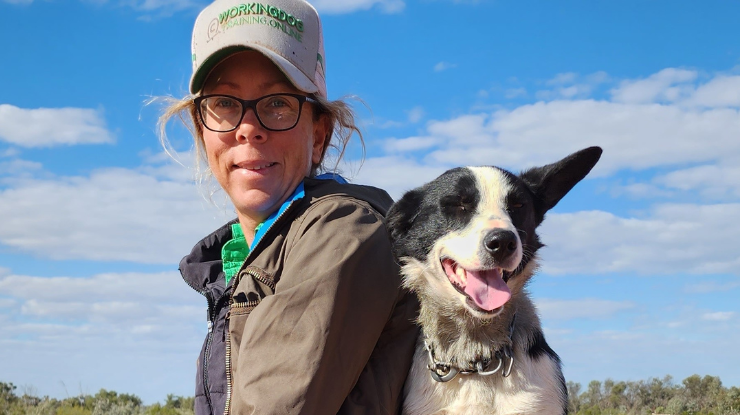
劳伦·贝雷斯福德与米莉,摄于昆士兰州尤洛镇法纳姆平原牧场。
昆士兰州穆尔加地区的法纳姆平原牧场面临三大生产难题:硬结黏质土壤、间歇性降雨、饲草长期断供。
劳伦·贝雷斯福德是第五代牧场主,同时荣获2024年拉克伦·休斯基金会奖学金。她以这些现实难题为灵感,发起了粘土洼地生态修复项目,该项目后续也为她赢得了基金会颁发的2024年生命之树奖。
五年前回到家族牧场后,劳伦开始探索在当地半干旱地貌中推行再生农业模式。这片区域的黏土表层土稀薄、雨水渗透性差、地表径流流失快。
她摸索出一套新颖且低成本的方案:借助自家牛群,改造牧场上原本寸草难生的粘土洼地地块。
牧场概况简介
名称:劳伦·贝雷斯福德——昆士兰州尤洛镇 法纳姆平原牧场
占地面积:30100公顷
经营业态:杂交肉牛繁育,品种包含圣格鲁迪牛、安格斯牛、婆罗门牛
草场类型:原生草场、穆尔加灌丛草场
土壤类型:松软冲积土、吉迪林地土、复合型穆尔加林地土壤
年均降雨量:300毫米
粘土洼地生态修复
劳伦采用创新方式,就地利用牧场现有资源,对位于主牛场和畜舍旁的粘土洼地进行改良,提升土地生产力。
劳伦表示:“项目地块的土壤物理、化学及生物性状均十分糟糕,微生物活性低,可利用养分匮乏。”
关键在于,她的改良方案无需从外地长途运输昂贵物料进场。
她选择将断奶牛群临时圈养在粘土洼地地势最高的围栏区域,利用牛只的粪便、尿液和蹄部踩踏,滋养并疏松这片贫瘠土壤。
同时通过简易微地形修整减少地表径流,让雨水能更深渗入土层;经过一段时间休牧后,地块植被逐步恢复生机。
劳伦介绍:“每年断奶季,我把断奶牛群夜间圈养在住宅附近的粘土洼地区域,围起围栏并投放干草供其采食。
白天则把牛群赶到优质多样的草场放牧。
连续九个夜晚圈养后,牛蹄踩踏夯实并破开了土壤板结层,粪便和尿液也为土壤补充了养分。”
休牧修复
断奶牛群迁离后,劳伦将该地块继续围栏封闭、实行休牧。散落留存的干草自然铺覆,逐步形成地表覆盖腐殖层。
劳伦表示:“我让这片粘土洼地自然休养恢复。如今已然焕发出新生植被,也让我们摸索出了方法,可对牧场内更多同类粘土洼地进行地力改良。”
劳伦借助平地机修筑一两英尺高的等高土埂,并在土埂下坡一侧种植滨藜幼苗。洼地浅层黏土下方是坚硬如岩的板结层,受此限制土埂无法修筑得更高,但仍能有效拦蓄地表径流、提升雨水下渗能力。栽种的滨藜稳固了等高土埂、阻滞扬尘、增加地表植被覆盖,进一步改善土壤入渗条件。
恰逢适时降雨,经踩踏翻松、养分补给后的土地迅速被植被覆盖。目前这片地块暂未达到提升载畜量的条件,但劳伦认为,以极低成本对更多土地开展生态修复,具备可观的长期发展潜力。
具备抗洪韧性
2025年 3月特大洪水过后,这片经过植被修复的粘土洼地地块,比牧场上其他未修复的同类洼地状况好得多,大量先锋植物与低演替植被(尤其冬季一年生草本)纷纷萌生生长。
劳伦表示:“地形修整加上地表植被覆盖有效减轻了水土流失,植被也得以持续生长。这套方式能帮助牧场为未来极端天气做好风险防护。”
劳伦希望通过示范,让其他养殖从业者掌握简易、低成本的同类土地修复方法,从而提升整个区域的土地生产能力。
她说道:“我希望这个修复项目操作简单,便于其他人直接效仿推广。”
土地增肥四步法
从小范围起步:选取临近现有设施、交通便利的地块。
依托现有牧场管理流程:借牲畜断奶、分群或入栏阶段,集中牛群踩踏改良贫瘠荒地,实现土地修复。
充分利用天然降水:修整地形地势,最大限度拦蓄、留存雨水。
封闭休牧促恢复:围栏圈定目标地块,经牲畜改良后预留充足时间,让土地自然休养生息、生态再生
这类故事契合全球聚焦女性农业从业者的大背景,2026 年被定为国际女农民年Food and Agriculture Organization of the United Nations
消息来源:MLA
Using cattle to restore claypans
Lauren Beresford and Millie at ‘Farnham Plains Station’, Eulo, Queensland.
Three key production challenges face 'Farnham Plains Station' in Queensland's mulga region: hard-setting clay soils, episodic rain and long feed gaps.
Lauren Beresford, fifth-generation grazier and a recipient of the 2024 Lachlan Hughes Foundation scholarship, used these challenges as the inspiration behind her claypan restoration project. The project later earned Lauren the Foundation’s 2024 Tree of Life Award.
After returning home to the family property five years ago, Lauren set about examining how she could use regenerative practices in her region’s semi-arid country, where clay soils have minimal topsoil, poor infiltration and shed water quickly.
She landed on a novel, cost-effective way to transform an area of previously unproductive claypan on her property by using her own cattle.
FARM SNAPSHOT
Name: Lauren Beresford – ‘Farnham Plains Station’, Eulo, Queensland
Area: 30,100ha
Enterprise: Crossbred beef cattle breeding enterprise with Santa Gertrudis, Angus and Brahman
Pastures: Native pasture and mulga
Soils: Softer alluvial country types, gidgee, mixed mulga lands
Rainfall: 300mm
Regenerating the claypan
Lauren’s innovative approach saw her use the resources she had on-property to make an area of claypan adjacent to the main cattle yards and stables more productive.
“The area my project focused on had poor physical, chemical and biological soil health, with low microbial activity and low available nutrients,” Lauren said.
Importantly, her solution avoided the need to bring expensive inputs over long distances onto the property.
Instead, she decided to temporarily hold her weaners in a fenced-off area at the highest point of the claypan, so their manure, urine and hooves could nourish and break up its unproductive soils.
Some minor land contouring reduced run-off, allowing water to soak deeper into the soil – which after a period of rest began to spring back to life.
“I decided to yard the weaners overnight in an area of claypan near the house during our annual weaning – I fenced it off and gave them access to hay.
“During the day they were tailed out on good quality, diverse pastures.
“After nine nights they had trampled the soil surface and broken up the crust, as well as enriched the soil with dung and urine,” Lauren said.
Rest and recovery
After the weaners were moved on, Lauren left the area fenced-off to rest, and with the help of leftover hay that she had spread out, mulch started to form.
“I left the area of claypan to do its thing. Our reward has been new plant growth and insights into how we can make further areas of claypan on the property more productive,” Lauren said.
Lauren planted saltbush seedlings on the lower side of one-to-two feet high earth contour banks that she had formed using a grader. Despite the hard toffee rock beneath the shallow claypan preventing her from building them up any higher, they did a good job in stopping water run-off and increasing infiltration. The plantings helped stabilise the contour banks, caught dust and contributed to ground cover, which further improved water infiltration.
Some well-timed rainfall meant vegetation began to cover the freshly churned and nourished soil. While not yet ready to support increased carrying capacity, Lauren sees the long-term potential in regenerating further areas of land with minimal expense.
Resilient to floods
After severe floods in March 2025, the project area of revegetated claypan fared far better than other unrestored areas of claypan on the property, with a variety of pioneer and low succession plants, particularly winter annuals, emerging.
“The contouring and ground cover reduced erosion and the plants kept growing – it’s a way we can insure ourselves against future extreme weather events,” Lauren said.
Lauren hopes by demonstrating how producers can reinvigorate similar types of land easily and cost-effectively, greater productivity will be enjoyed in the region.
“I wanted the project to be simple and easily replicated by others,” she said.
Four steps to more fertile land
Start small: Choose an easily accessible area close to existing infrastructure
Piggyback on existing management activities: During weaning, drafting or induction, concentrated cattle numbers can be used to break up and restore unproductive land.
Make the most of available water: Consider land contouring to catch and retain as much water as possible.
Rest and recovery: Use fencing to give your target area enough time to regenerate following animal inputs.
Stories like this sit within a broader global focus of women in agriculture, with 2026 recognised as the International Year of the Woman Farmer.
Source:MLA

