

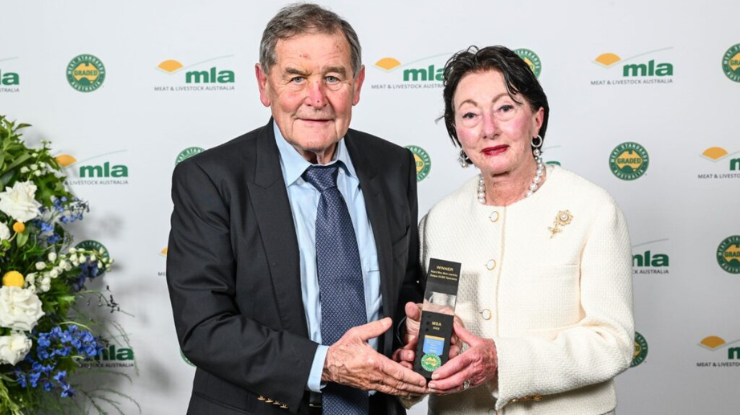
罗斯·梅斯与玛丽·梅斯夫妇原本以酿造塔斯马尼亚顶级威士忌和金酒闻名,如今凭借澳大利亚肉类标准(MSA)赛事获奖,又斩获全州最佳牛肉养殖荣誉。
这对夫妇在2023–2025年度澳大利亚肉类标准(MSA)食用品质卓越奖中,斩获塔斯马尼亚州最佳大型非谷饲生产商奖项。
在为期两年的评选周期内,梅斯家族共出栏234头牛,MSA平均指数达63.41,合规率为99%。
农场概况
农场主:罗斯·梅斯、玛丽·梅斯,劳伦尼庄园——塔斯马尼亚州乌斯镇
占地面积:160公顷
经营项目:饲养150–200头安格斯牛及部分海福特牛,以育肥为主
草场植被:三叶草、黑麦草
土壤类型:壤土及厚重黑黏土
年均降雨量:400毫米
深耕传统肉牛养殖产区
坐落于乌斯镇德文特河上游谷地的劳伦尼庄园历史悠久,这里既是梅斯家族威士忌与金酒酿酒厂所在地,也是肉牛养殖基地。
夫妇二人原本来自昆士兰州,1992年迁居塔斯马尼亚时,购入了这片80公顷的庄园宅邸地块。十年后,他们又收购了相邻80公顷土地,使农场规模扩大了一倍。
据罗斯介绍,该庄园的肉牛养殖历史最早可追溯至1813年。当年这片土地被划拨给爱德华·洛德中尉,他曾在1804年2月随首批船队抵达德文特河沿岸,参与建立“范迪门斯地”定居点。
罗斯表示:“劳伦尼庄园最初占地超16200公顷,曾因肉牛、绵羊养殖,以及大片盛产小麦、大麦和啤酒花的农田而声名远扬。”
“二战末期,庄园当时的所有者布罗克家族(家中两个儿子均在战争中阵亡)将庄园售予塔斯马尼亚州政府,随后被拆分划分为退伍军人安置垦殖地块。”
紧密联动的供应链体系
如今,农场种植大麦,用于酿造梅斯家族的单一麦芽威士忌,同时饲养安格斯肉牛。
罗斯说:“我们主要采购活重在330–350公斤的安格斯断奶牛犊。”
“随后进行约15个月的饲养育肥,直至达到理想屠宰体重,净胴体重最低380公斤,最高420公斤。”
“我们的业务与JBS斯威夫特公司深度绑定,对方不仅负责肉牛屠宰加工,还委托专属肉牛采购员,直接从育种牧场为我们采购断奶牛犊。”
罗斯的目标市场是JBS旗下高端草饲牛肉品牌小乔(Little Joe),该品牌有严格标准:肉牛须通过MSA品质评级,且大理石花纹等级达到4级及以上。
凡是达不到小乔品牌标准的肉牛,则归入JBS另一品牌大南巅峰草饲牛肉(Great Southern Pinnacle Grass Fed Beef),该品牌同样要求通过MSA评级,大理石花纹等级需达到2级及以上。
全年优质营养饲喂
庄园年均降雨量400毫米,且可引用德文特河水源进行灌溉,园内三叶草与黑麦草草场四季常青、长势稳定,不受季节气候影响。
罗斯介绍:“牛群刚进场时,会先在圈舍静养10至14天,投喂干草,让它们适应电子围栏。”
“农场布设了永久性通电围栏,同时搭配临时电子围栏划分草场区块,每三天就能将牛群轮换至新鲜牧场放牧。”
若5月需要补饲,梅斯夫妇会投喂干草作为粗饲料;隆冬时节则饲喂农场自种自制的优质青贮饲料。如有需要,8、9月份也会再次补饲干草。
数据应用赋能养殖
梅斯夫妇在进行胴体评级结果复盘时,会重点关注眼肌面积、脂肪覆盖率及臀部品相。
罗斯表示:“我们利用胴体品质反馈数据,以此做出科学养殖决策,确保持续达到旗下合作牛肉品牌的定级标准。”
“看到努力终有回报,内心十分欣慰。更值得骄傲的是,我们能自豪地说:这里产出塔斯马尼亚顶级的威士忌、金酒和牛肉。”
消息来源:MLA
Precision finishing delivers standout MSA results
Originally known for their ability to produce some of Tasmania’s finest whisky and gin, Ross and Mary Mace have added the title of producing the state’s best beef to the mix after their recent Meat Standards Australia (MSA) win.
The pair took home the best Larger Non-Grainfed Producer Award for Tasmania in the MSA 2023–25 Excellence in Eating Quality Awards.
Over the two-year period, the Mace family consigned 234 head and had an average MSA Index of 63.41 and compliance of 99%.
FARM SNAPSHOT
Name: Ross and Mary Mace, ‘Lawrenny Estate’ – Ouse, Tasmania
Area: 160ha
Enterprise: 150–200 Angus and some Hereford cattle for fattening
Pastures: Clover and ryegrass
Soils: Loams and heavy black clay soil
Rainfall: 400mm
Farming on old cattle country
Nestled in the Upper Derwent Valley at Ouse is the historic ‘Lawrenny Estate’, home to the Mace family’s whisky and gin distillery and beef cattle enterprise.
Originally from Queensland, the couple purchased the 80ha homestead block when they moved to Tasmania in 1992. They doubled the property 10 years later when they purchased a neighbouring 80ha block.
According to Ross, beef production on the estate dates back to 1813, when the land was allocated to Lieutenant Edward Lord, who was in the first contingent which sailed to establish the ‘Van Diemen’s Land’ settlement on the Derwent in February 1804.
“Lawrenny Estate originally comprised more than 16,200ha and became renowned for its cattle, sheep and abundant fields of wheat, barley and hops,” Ross said.
“It was at the end of World War II when its then owners, the Brock family (who lost their two sons in the war) sold Lawrenny Estate to the Tasmanian Government to be split up into returned soldier settlement blocks.”
A strong connected supply chain
Today, the property grows barley to produce the Maces’ single malt whisky and Angus steers.
“We buy in predominantly Angus weaners at a liveweight of 330–350kg,” Ross said.
“We then rear them for about 15 months until they reach our desired weight, which is a minimum dressed weight of 380kg and a top of 420kg.
“Our business is very entwined with JBS Swift, who not only processes our cattle, but commissions our cattle buyer who makes our weaner purchases directly from breeders.”
Ross’s target market is the JBS premium grassfed brand, Little Joe, which has a range of specifications including that cattle must achieve MSA grading and have a marble score of 4+.
Any of their cattle that don’t fit the Little Joe brand, go into JBS’s Great Southern Pinnacle Grass Fed Beef brand, which also requires MSA grading and a marble score of 2+.
Quality nutrition year round
With an annual average rainfall of 400mm and access to irrigation from the River Derwent, Lawrenny Estate’s clover and ryegrass pastures remain green and productive year round – regardless of seasonal conditions.
“When cattle first arrive on the property, we settle them in the yards for 10–14 days, feed them hay and get them used to electric fencing,” Ross said.
“We have permanent fences to carry electricity around the farm and temporary electric fences are used to subdivide paddocks, so we can easily move our herd onto fresh pasture every three days.”
If they have to feed out in May, the Maces use hay for roughage and during the height of winter they feed high quality silage which is produced on-farm. They also feed hay again in August and September, if necessary.
Using the data
When reviewing carcase grading results, the Maces pay particular attention to eye muscle, fat cover and rump.
“We use the carcase feedback we receive to help make informed decisions that will enable us to keep meeting the required grades for those beef brands we are targeting,” Ross said.
“It feels terrific to see it’s paid off – more so to say, ‘we produce some of Tasmania’s best whisky, gin and beef’.”
Source:MLA

