

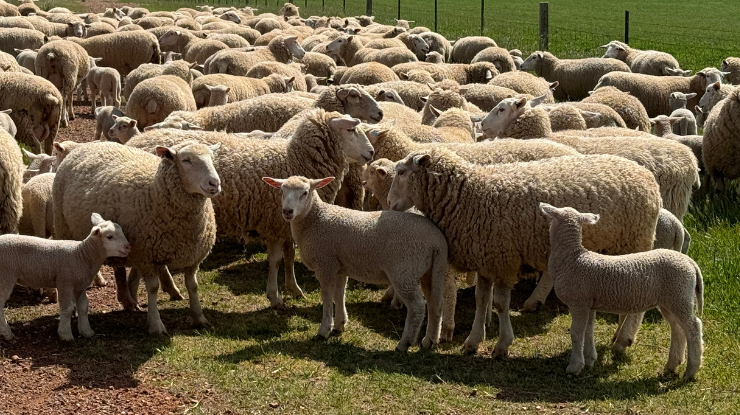
山园牧场(Hills Park)的母羊与羔羊,位于新南威尔士州耶荣溪镇
对新南威尔士州养殖户安德鲁・亨特(Andrew Hunter)而言,在其经营状况整体向好的肉羊养殖场中,后备母羔羊曾是最不受重视的品类。
“我们让后备母羔羊受孕这块做得还算不错”, 安德鲁(Andrew)表示。
“但在关键指标上始终达不到理想效果:羔羊存活率,以及这些母羊后续的繁育表现。”
安德鲁在耶荣溪镇(Yerong Creek)附近的山园牧场(Hills Park)自主繁育杂交基础母羊群,长期以来一心追求出栏大体重羔羊。但这也导致后备母羔羊在关键生长阶段常常得不到充足照料。
精细化前置饲养管理
在加入澳大利亚肉类与畜牧业协会(MLA)“提升后备母羔羊产羔量” 养殖户示范基地项目(Producer Demonstration Site, PDS)后,安德鲁重新梳理了全场后备母羔羊的整套饲养管理方案。
最大转变在于:养殖目标不再只是单纯配种受孕,而是主动管控,提升羔羊存活率与母羊后续繁育性能。
他表示:“我们现在格外重视让后备母羔羊达到最低配种体重,并且从配种到产羔全程保障其持续生长。”
以往即便后备母羔羊体重偏低,养殖场仍会安排配种,单纯依靠羊群自身自然繁育能力。
安德鲁称:“我们清楚它们能怀上羊羔,但过去并未配套管理来保障其生产表现。”
这一管理调整契合最新行业研究结论,该示范基地项目也通过实地试验证实:配种体重与全程持续生长,是决定羔羊存活率、母羊繁育水平的核心因素。
核心指标显著提升
尽管山园牧场(Hills Park)的母羊受孕率原本就处于较高水平,但真正的效益提升体现在产羔环节。
安德鲁(Andrew)表示:“变化最直观的是羔羊成活率,双羔群体改善尤为明显。”
双羔存活率从原先刚超100%提升至接近150%。除此之外,母羊损耗数量有所下降,子宫脱出问题基本绝迹。
缓解产羔阶段应激压力
除养殖数据改善外,优化后的管理方式也大幅改善了牧场产羔期的作业体验。
此前,后备母羔羊产羔的管护工作难度持续攀升。
安德鲁(Andrew)说道:“当时我们甚至开始怀疑是否还要给后备母羔羊安排配种,这也是本次管理调整带来最根本性的转变。”
如今前期饲养准备工作到位,产羔阶段的难题彻底改观。
“清楚自己的饲养流程完全合规合理,我们心里的重担总算卸下了。”
参与实践,学以致用
多年来,安德鲁(Andrew)参与过多个由澳大利亚肉类与畜牧业协会(MLA)主导的项目,与行业技术顾问紧密协作,在牧场实地试验并优化饲养管理方案。
他表示,参与养殖户示范基地项目(Producer Demonstration Site, PDS)帮助自己提升养殖决策能力,夯实后备母羔羊饲养管理的基础要点。
“深度参与这类项目总能让我们收获颇丰,对牧场整体经营管理起到至关重要的作用”。 安德鲁说道。
夯实基础举措,收获可观成效
对安德鲁(Andrew)而言,此次实践最大的心得是抓好基础管理至关重要。
他表示:“归根结底就是摸清后备母羔羊的生长需求,采用差异化饲养方案。”
想要提升母羊与羔羊存活率,关键要点包含以下方面:
设定明确的最低配种体重标准
孕期全程维持稳定生长速度
饲粮分配优先保障后备母羔羊
夯实后备母羔羊终身繁育基础
该项目得出一项核心结论:从初期做好后备母羔羊饲养管理,能够产生长期养殖收益。
安德鲁(Andrew)表示:“倘若后备母羔羊初次产羔前生长发育良好,后续繁育周期的管护难度会大幅降低。”
经过科学培育的后备母羔羊如今具备以下优势:
更快恢复体况
整群生产性能更稳定
二次配种繁育表现更佳
“我们的目标是不让后备母羔羊成为养殖体系的负担”, 他说道。
“只要管理得当,它们的生产性能能够大幅接近成年基础母羊。”
消息来源:MLA
Setting ewe lambs up early for smoother seasons ahead
Ewes and lambs at ‘Hills Park’, Yerong Creek, NSW
For NSW producer Andrew Hunter, ewe lambs were once the ‘poor relation’ in an otherwise high-performing sheep enterprise.
“We were pretty good at getting ewe lambs in lamb,” Andrew said.
“But we weren’t getting the results where it counts: lamb survival and how those ewes performed afterwards.”
Running a self-replacing maternal composite flock at ‘Hills Park’ near Yerong Creek, Andrew had long focused on turning off heavy lambs. However, that often meant his ewe lambs received less attention during critical growth phases.
Proactive management
After joining the ‘More lambs from ewe lambs’ MLA Producer Demonstration Site (PDS), Andrew reassessed how ewe lambs were managed across the system.
The biggest change has been a shift from simply achieving conception to actively managing for survival and performance.
“We’ve put a lot more focus on getting ewe lambs up to a minimum joining weight and then keeping them growing right through to lambing,” he said.
Previously, lighter ewe lambs were still joined, relying on the flock’s natural fertility.
“We knew they’d get in lamb, but we weren’t managing them to actually perform,” Andrew said.
This shift reflects recent research, with the PDS demonstrating in practice that joining weight and continued growth are critical drivers of lamb survival and ewe performance.
Gains where it matters
While conception rates at Hills Park were already strong, the real gains have come at lambing.
“Where we’ve seen the difference is in survival, particularly in our twin mobs,” Andrew said.
Twin lamb survival has moved from just over 100% to now nudge 150%. In addition, Andrew has seen reduced ewe losses and hardly any prolapses.
Reducing pressure at lambing
Beyond the numbers, improved management has changed the on-farm experience during lambing.
Previously, lambing ewe lambs had become increasingly difficult.
“It was getting to the point where we were questioning whether we should even join ewe lambs – that’s probably been the real quantum shift,” Andrew said.
However, improved preparation has transformed that period.
“It just took a real weight off our shoulders knowing we’re doing the right thing.”
Learning through involvement
Over the years, Andrew has been involved in other MLA-led projects, working closely with advisors to test and refine management practices on-farm.
He said participating in the PDS has helped sharpen decision making and reinforce the fundamentals of ewe lamb management.
“We’ve always learned a lot from being involved, it’s been quite important to the management of our business,” he said.
Simple fundamentals, strong results
For Andrew, the biggest takeaway has been the importance of getting the basics right.
“It comes back to understanding what they need and managing them differently,” he said.
For ewe/lamb survival this includes:
setting clear minimum joining weights
maintaining growth through pregnancy
prioritising ewe lambs within the feed system.
Setting ewe lambs up for life
A key insight from the project has been the long-term value of getting ewe lamb management right from the start.
“If they’re well grown for that first lambing, they’re much easier to manage afterwards,” Andrew said.
Well-prepared ewe lambs are now:
easier to return to condition
more consistent as a group
better able to perform at their second joining.
“The aim is for them not to be a burden on the system,” he said.
“With the right management, they can perform much closer to mature ewes.”
Source:MLA

