

核心要点
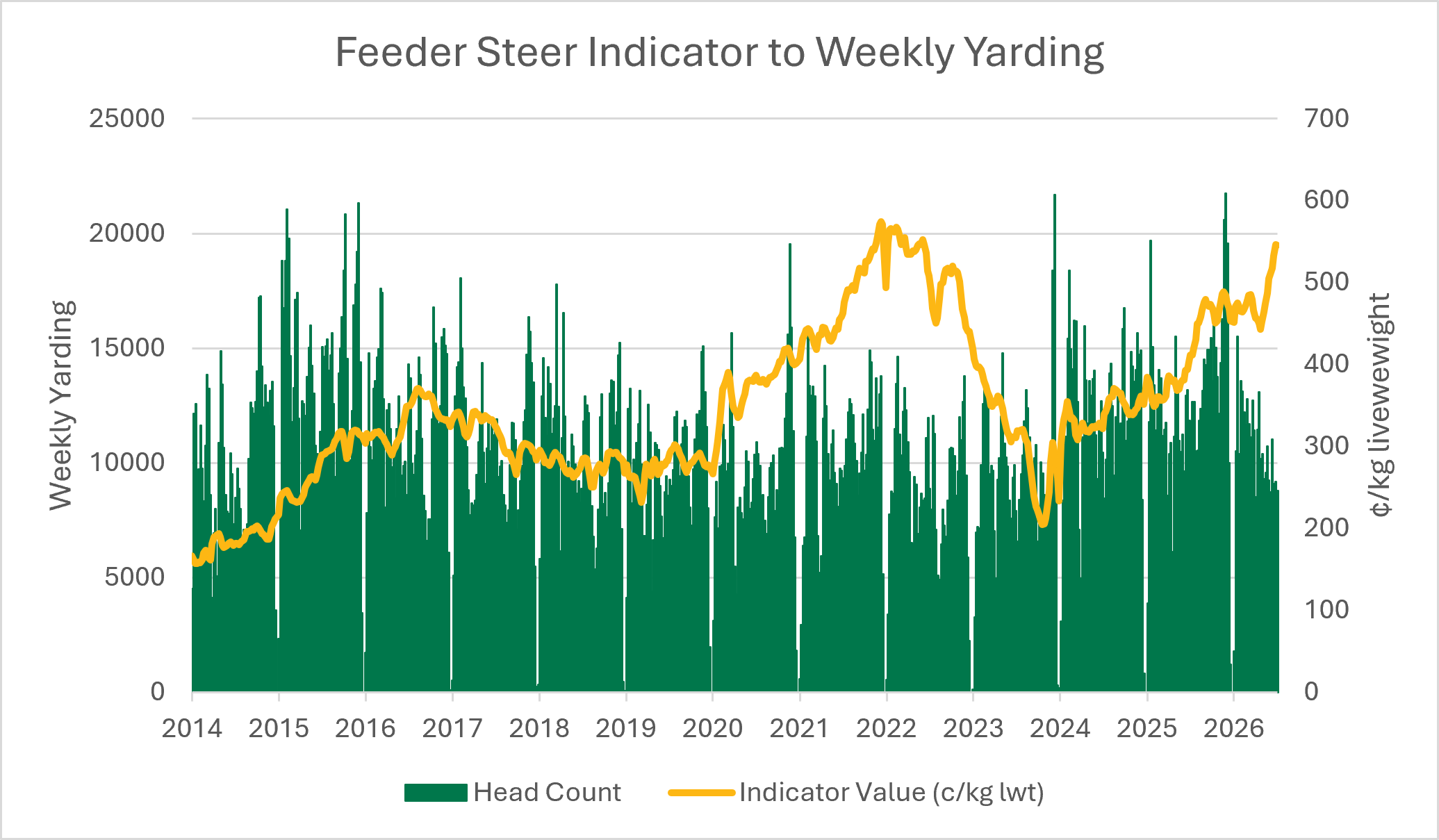
近一个月育肥公牛指标涨幅达7.5%,表现优于其他肉牛相关指标。
对比2014年以来的年内均值,当前育肥公牛供应量处于中等水平。
育肥养殖规模扩张、养殖户竞拍竞争加剧、全球肉牛供给紧张,共同推高了该指标。
本周育肥公牛活重指标报544美分/公斤,近一月上涨38美分(涨幅7.5%),逼近2021年12月创下的576美分/公斤活重历史高点。除奶牛及加工母牛指标外,其余各类肉牛指标近一月全线走高:后备一岁母牛指标涨幅2.5%,后备一岁公牛指标涨幅6.5%,重型公牛指标持平。
对比2014年以来拍卖市场育肥公牛供应数据,截至2026年第28周年内出栏总量较均值高出1%,今年交易总量287755头,历年均值为285891头。但2024、2025年供应量明显更高,分别达323962头、318321头。
推高育肥公牛指标的各项影响因素
育肥场需求持续增长
尽管拍卖市场育肥公牛出栏量仍维持2014年以来平均水平,但育肥行业大规模投资大幅拉动了该品类需求。澳大利亚育肥场协会(ALFA)与澳洲肉类及畜牧业协会(MLA)最新一季度(3月)全国育肥场调查报告显示,谷物育肥牛季度出栏量首次突破百万头,达1046717头。
全球供给紧缺与中国进口配额带来的影响
过去12个月,依托自身产能填补全球牛肉供给缺口的优势,澳大利亚各类肉牛价格指标同步走高。
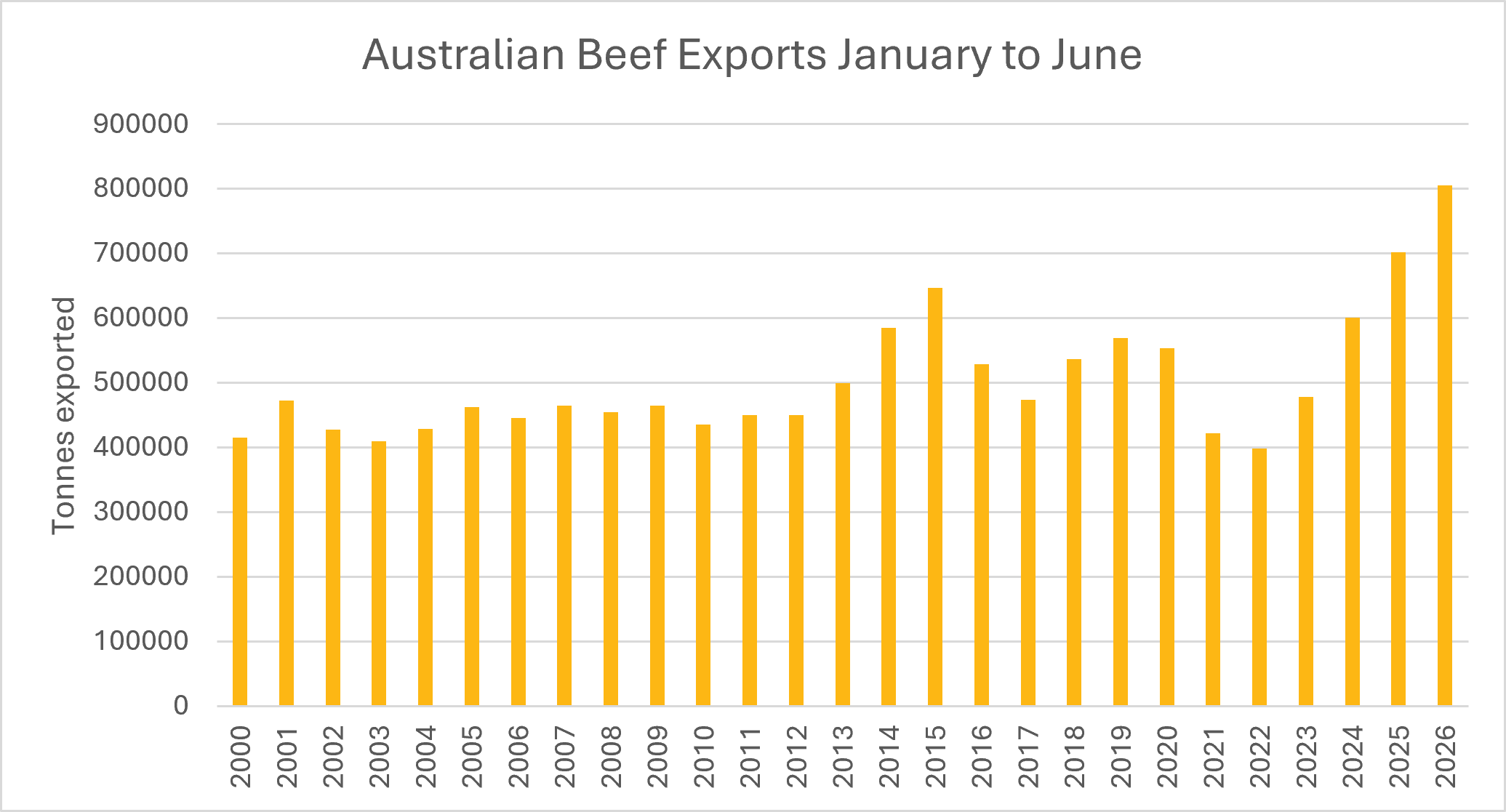
2026自然年中国针对主要牛肉出口国设置关税配额,促使各国出口商争相抢占中国市场,今年上半年牛肉出口量创下2000年以来新高。
2026年1月至6月,澳大利亚牛肉出口总量达80.5万吨,较2025年同期历史峰值多出10.3万吨。本年度中国牛肉进口关税配额现已用尽,育肥公牛市场因此备受关注——中国市场高度青睐澳大利亚谷饲牛肉。当下育肥场采购牛只,可在新年前后完成肉牛育肥出栏,届时中国新一轮关税配额将生效,这一预期支撑起当前旺盛的采购需求。
供稿:澳大利亚肉类与畜牧业协会市场信息分析师 亚历克斯・弗莱
数据发布于2026年7月10日,发布当日信息准确有效
澳大利亚肉类及畜牧业协会(MLA)不对本刊物所载任何信息的准确性、完整性及时效性作出任何保证。用户使用或依赖本刊物任何内容,风险自行承担;因使用或依赖相关信息所造成的任何损失与损害,MLA概不承担任何责任。未经MLA事先书面许可,本刊物任何内容不得擅自转载、复制。凡使用MLA刊物、报告及相关信息,均须遵守MLA市场报告及信息使用条款。
消息来源:MLA
What’s been driving growth in the Feeder Steer Indicator?
Key points
The Feeder Steer Indicator has outperformed other cattle indicators over the last month lifting 7.5%.
Feeder steer supply has sat at an average level looking at year-to-date averages since 2014.
Growth in lot feeding, a lift in competition from producers and impacts of low global supply drive the indicator.
This week, the Feeder Steer Indicator sits at 544¢/kg liveweight (lwt), lifting 38¢ (+7.5%) over the last month to approach the record of 576¢/kg lwt set back in December 2021. All cattle indicators outside of the Dairy Cow and Processor Cow have lifted over the last month, from between 2.5% for the Restocker Yearling Heifer Indicator to 6.5% for the Restocker Yearling Steer Indicator, while the Heavy Steer Indicator remained stable.
Evaluating feeder steer supply at saleyards since 2014, year-to-date (YTD) (at 28th week of the year) 2026 sits 1% above the average, with 287,755 head going through saleyards this year against an average of 285,891 head. However, 2024 and 2025 were significantly higher at 323,962 and 318,321 head, respectively.
The drivers lifting the Feeder Steer Indicator
Growth in feedlot demand
While the saleyard supply of feeder steers is still sitting at the average level since 2014, significant investment in the lot feeding sector has also lifted demand for the category. The Australian Lot Feeders’ Association (ALFA) and Meat & Livestock Australia’s (MLA) most recent March quarter National Feedlot Survey showed turn-off of grainfed beef reached over 1 million head for the first time in a single quarter at 1,046,717 head.
Impact of low global supply and China quota
Australia’s position to fill a limited global supply shortage of beef has also helped to elevate all cattle indicators over the last 12 months.
China’s tariff quota on major beef exporters for the calendar year 2026 created an incentive for exporters to race each other into the China market, leading to the highest level of beef exported in the first six months of the year since 2000.
From the start of 2026 to the end of June 2026, Australia had exported 805,000 tonnes of beef, beating the previous record of 2025 by 103,000 tonnes. With the China quota now exhausted for the current calendar year, the feeder steer market comes into strong focus as China heavily favours Australia’s grainfed product. Feedlots purchasing now will be well placed to finish cattle around the new year when China’s tariff is due to expire, supporting a basis in current demand.
Attribute content to: Alex Fry, MLA Market Information Analyst.
Information is correct at time of writing on 10 July 2026.
MLA makes no representations as to the accuracy, completeness or currency of any information contained in this publication. Your use of, or reliance on, any content is entirely at your own risk and MLA accepts no liability for any losses or damages incurred by you as a result of that use or reliance. No part of this publication may be reproduced without the prior written consent of MLA. All use of MLA publications, reports and information is subject to MLA’s Market Report and Information Terms of Use.
Source:MLA

