

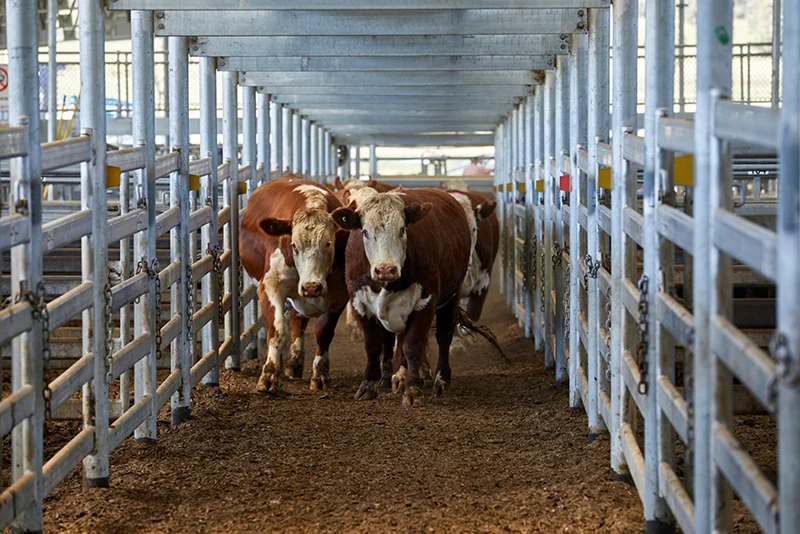
澳大利亚肉类与畜牧业协会(MLA)发布最新年度活畜交易市场调查报告,由国家牲畜信息服务中心(NLRS)调研完成。报告显示,该财年肉牛交易活跃度上升,绵羊交易量大幅下滑。
截至2026年6月30日的12个月内,澳大利亚场内交易肉牛超518万头、绵羊1450万头。
肉牛交易量同比上涨7.4%,绵羊交易量同比下跌11.6%,国内市场行情呈现明显分化。
肉牛
对于肉牛养殖户,尤其是东部各州从业者而言,牲畜交易市场明显更为繁忙。肉牛交易量较上一财年增加35.6万头以上。
昆士兰州与新南威尔士州领涨。新州仍是澳大利亚肉牛交易量最大的州,27个交易市场合计成交217万头;昆州紧随其后,23处交易市场成交165万头。
作为昆州肉牛交易核心,罗马牲畜交易市场的肉牛吞吐量再次位居全国首位,全年成交肉牛362051头,同比增长21.5%。
往南,达博地区牲畜市场与塔姆沃思区域牲畜交易所交易量大幅走高,增幅分别达到31.8%和38.1%。
尽管东部大部分地区肉牛交易回暖,但全国走势并不统一。受各地生产环境影响肉牛供应与流通,维多利亚州、西澳州、南澳州的肉牛交易量均出现下滑。
绵羊
全国绵羊交易量减少近190万头,多数州交易量走低。
新南威尔士州依旧是澳大利亚绵羊交易量最高的州,尽管同比下降6.5%,全年成交仍达866万头。
维多利亚州降幅居前,绵羊交易量下跌25.3%,至361万头;南澳大利亚州交易量同样大幅萎缩。
维州和南澳场内交易下滑,主要源于长期干旱,加上前几年集中出栏,导致羊群基数、可上市绵羊供给减少。
新州部分地区气候条件相对利好,缓和了当地的降幅。
西澳大利亚州走势和全国相反。依托卡坦宁和穆奇阿市场交易量增长,该州绵羊交易上涨19%,至128万头。
这一增长背后是差异化的市场格局:绵羊养殖户根据活羊出口走弱、国内市场机会变化,调整出栏销售计划。
沃加沃加牲畜交易中心仍是澳大利亚最大的绵羊交易市场,全年成交227万头;福布斯的中西部牲畜交易所紧随其后,成交186万头。
虽然肉牛、绵羊市场走势分化,但牲畜交易市场在澳大利亚活畜销售体系中依旧发挥着关键作用。
消息来源:MLA
Australia's saleyards tell two different stories in 2025–26
The latest annual Saleyard Survey, released by Meat & Livestock Australia (MLA) and conducted by the National Livestock Reporting Service (NLRS), reveals a year of increased cattle activity alongside a significant decline in sheep transactions.
Over the 12 months to 30 June 2026, more than 5.18 million cattle and 14.5 million sheep were transacted through Australian saleyards.
Cattle numbers rose 7.4%, while sheep transactions fell by 11.6%, highlighting the contrasting market conditions across the country.
Cattle
For cattle producers, particularly in the eastern states, saleyards were noticeably busier. More than 356,000 additional cattle were transacted compared with the previous financial year.
Queensland and NSW led the increases. NSW remained Australia's largest cattle-selling state, recording 2.17 million head across 27 saleyards. Queensland followed closely with 1.65 million head transacted through 23 facilities.
At the centre of Queensland's cattle trade, Roma Saleyards once again recorded the nation's highest throughput. More than 362,051 cattle were sold during the year – an increase of 21.5%.
Further south, both Dubbo Regional Livestock Market and Tamworth Regional Livestock Exchange posted strong growth with transaction volumes rising 31.8% and 38.1% respectively.
While cattle activity strengthened across much of the east, the trend was not consistent nationally. Victoria, WA and SA all recorded lower cattle transaction volumes as regional conditions continued to influence cattle supply and movement.
Sheep
National sheep transactions fell by almost 1.9 million head with most states recording lower throughput.
NSW retained its position as the country's largest sheep-selling state, accounting for 8.66 million head despite a 6.5% fall from the previous year.
Victoria experienced one of the steepest declines with sheep transactions dropping by 25.3% to 3.61 million head. South Australia's volumes also contracted significantly.
Lower saleyard transactions across Victoria and SA largely reflected prolonged dry conditions and elevated livestock turn-off in previous years, which reduced flock numbers and the availability of sheep for sale.
NSW experienced comparatively more favourable seasonal conditions in some regions to help moderate its decline.
Western Australia moved against the national trend. Supported by increased numbers at Katanning and Muchea, sheep transactions rose 19% to 1.28 million head.
The increase reflects different market dynamics as sheep producers adjust their selling decisions in response to declining live sheep exports and changing domestic market opportunities.
Wagga Wagga Livestock Marketing Centre maintained its position as Australia's largest sheep-selling centre to record 2.27 million transactions. The Central West Livestock Exchange at Forbes followed with 1.86 million head.
Despite the contrasting trends of cattle and sheep markets, saleyards continue to play a critical role in Australia's livestock marketing system.
Source:MLA

