

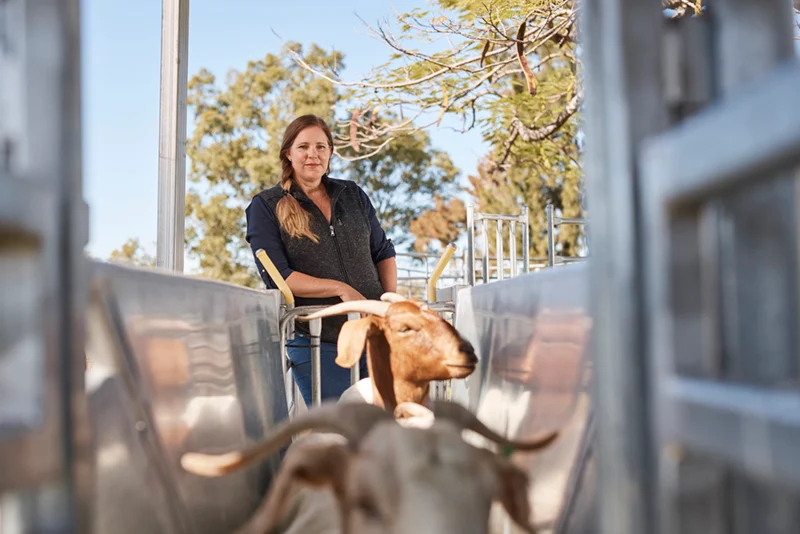
寄生虫学家安妮・比斯利博士正在研究切实可行、有数据支撑的解决方案,助力山羊健康生长,帮助养殖户增收发展。
随着驱虫药耐药性持续削弱澳大利亚山羊产业的寄生虫防控效果,研究人员正在为养殖户研发实用方案,应对驱虫药剂药效下降的问题。
昆士兰大学动物科学与生产高级讲师、寄生虫学家安妮・比斯利博士,正调研养殖户对非药物驱虫手段的认知与应用情况,找出制约行业发展的知识短板与现实阻碍。
安妮负责澳大利亚肉类与畜牧业协会(MLA)资助的 “观察寄生虫” 系列研讨会项目,旨在把驱虫之外的各类寄生虫管控手段,转化为有实证依据、养殖户可直接使用的实操资料。
认清行业困境
安妮表示,许多山羊养殖户,尤其是高降雨地区的养殖户,正遭受驱虫药耐药性的影响,面临收益下滑与畜群生产能力下降的问题。
“养殖户投入大量时间与资金开展驱虫工作,这是保障畜群健康与福利的关键环节。”她说道。
“可一旦产生耐药性,驱虫药达不到养殖户预期的防控效果,动物与养殖场经营都会受到冲击。牲畜持续损耗,此前投入的时间与资金也就大打折扣。”
安妮提到,尽管已经存在其他寄生虫防控方案,但由于缺少针对山羊的明确实证支撑,这些方案的普及程度普遍不高。不少养殖户反映,掌握的信息不足,不敢贸然使用驱虫药以外的手段。
“现有的诸多替代防控手段,比如生物驱虫、选育抗寄生虫品种、通过营养调控增强动物免疫力等,针对山羊的研究与试验都十分有限。”她说。
“这也正是本项目的出发点:摸清养殖户现有认知、实际需求,帮助他们更好获取已有的科研依据。”
“即便困难重重,项目目前得到的最鼓舞人心的结果,来自养殖户自身的态度。”
“养殖户调研显示,山羊养殖户有很强的意愿去解决该问题,也愿意在牧场尝试新型防控手段。”
“他们十分重视动物福利,同时希望提升畜群生产水平,愿意参与问题的解决。对于本项目的推进来说,这一点至关重要。”
项目主要内容
为应对这一难题,“观察寄生虫”项目设立四大核心目标,旨在建立行业信心、填补知识空白,最终为养殖户提供有实证支撑的实用方案,用以替代或配合策略性驱虫药使用。
安妮联合昆士兰大学、新英格兰大学、墨尔本大学的行业专家以及资深山羊兽医,在澳大利亚各地山羊养殖户的支持下,重点开展以下几方面工作:
梳理现有研究:全面复盘非药物寄生虫防控相关已有研究,涵盖传统草场管控手段以及生物防控、靶向选择性治疗、遗传选育等创新技术。本次梳理将明确哪些防控策略已完成试验、哪些具备应用潜力,以及还存在哪些重大研究缺口,为后续给养殖户提供建议、确定行业重点投资方向打下基础。
收集养殖户反馈:通过全国养殖户调研,掌握山羊养殖户当前的体内寄生虫防控方式、阻碍他们采用非药物方案的各类因素,以及养殖户获取专业建议的渠道。
安妮表示:“初步回收的问卷显示,规模偏小、集约化程度较高的养殖户,相比大型商业化牧场,会尝试更多类型的防控手段。这也说明,收集不同规模养殖场的意见十分关键,能够确保推广资料贴合全行业实际,具备落地推广价值。”
完成问卷的养殖户还可以自愿接受研究人员访谈,进一步参与本项目。
测算成本数据:项目第三个目标是核算不同寄生虫管控方案在实际生产中的实施成本。
“驱虫药的前期投入清晰明了,但很多非药物手段涉及人力、配套设施以及时间成本,目前这些成本尚未得到充分量化。”安妮说道。
搭建初步成本对比模型,能够帮助养殖户更直观地了解各类方案的适用场景以及实际落地所需条件。
开展养殖户专题研讨:项目的研究与数据分析工作仍在推进,项目组已经陆续举办多场“观察寄生虫”线下研讨会与线上网络讲座,把研究成果转化为养殖户可以直接运用的实操知识。
讲座内容包含寄生虫生物学、监测工具,以及如何结合药物与非药物手段,搭建适配不同养殖模式、兼顾实证依据的均衡防控方案。全部课程内容均会录制并上传至线上,供大家查阅。
山羊寄生虫防控实用要点
随着“观察寄生虫”项目不断推进,安妮表示,从研究结果与养殖户实践经验中,已经总结出若干关键的寄生虫防控策略。
“在混养多种牲畜或是经营多个养殖板块的牧场,按照规划开展轮牧,在山羊放牧过的草场放牧牛只,能够降低草场幼虫污染程度。”她介绍道。
“原因在于绝大多数胃肠道线虫都具备宿主特异性。”
另一种效果较好的非药物防控手段是捕食线虫真菌——鞭毛戴氏真菌(商品名BioWorma®),该真菌可以减少草场上的寄生虫幼虫污染。
项目组同时发现,将策略性驱虫与更完善的检测监测手段相结合具备实际价值,把粪便虫卵计数以及FAMACHA评分纳入日常生产决策,只在驱虫药能够发挥最大效用的时候开展驱虫。
“这套方案十分值得推广,它并非完全摒弃药物,而是通过减少不必要的驱虫操作,把药物用在关键环节,以此保护驱虫药的药效。”安妮说道。
遗传选育与营养调控的应用潜力
安妮表示,针对寄生虫抗性的遗传选育以及营养调控,仍是未来研究极具前景的方向。
“和绵羊产业相比,支撑山羊定向选育的相关数据与可用资源相对匮乏。”她说。
“不过相关研究正在逐步推进,技术也在不断发展,方便养殖户选育抗逆性状更加优良的山羊。”
“我们同时也在关注部分养殖户正在试验的营养调控方案,尤其是供给充足蛋白质以提升机体免疫力,同时重点研究含有益植物化学物质的灌木饲用植物。”
“目前关于营养以及灌木饲草对山羊作用的科学基础仍在完善,因此养殖户参与、文献梳理以及成本测算工作格外重要,助力我们朝着行业共同目标持续推进。”
消息来源:MLA
Watch out worms
Parasitologist Dr Anne Beasley is working to uncover practical, evidence‑backed solutions that help goats, and producers, thrive.
As drench resistance continues to erode worm control effectiveness across Australia’s goat industry, researchers are developing practical solutions for producers to combat declining chemical performance.
Dr Anne Beasley – a parasitologist and Senior Lecturer in Animal Science and Production at The University of Queensland (UQ) – is working to understand producer awareness and adoption of non-chemical worm control strategies, to identify where knowledge gaps and practical barriers are holding the industry back.
Leading the research behind an MLA-funded project – the Watch-n-Worm workshop series – Anne aims to take what is known about parasite management options beyond drenching and turn it into evidence-based, producer-ready resources.
Understanding the challenge
Anne said many goat producers – especially those in high-rainfall regions – are facing a loss in profit and herd productivity due to the impacts of anthelmintic (drench) resistance.
“Producers invest significant time and money into drenching as an important part of maintaining herd health and welfare,” she said.
“But when resistance develops and drenches no longer provide the level of control producers expect, both the animals and the business feel the impact. Stock losses continue, and that investment of time and money is effectively undermined.”
While alternative parasite management strategies do exist, Anne said adoption is often limited by a lack of clear, goat-specific evidence to support them. Many producers report they simply don’t have enough information to feel confident using anything beyond drenches.
“A lot of the alternative strategies we have available – such as biological parasite controls, targeting parasite resistance traits or managing nutrition to support the immune system – are under-researched and under-tested in goats,” she said.
“This is exactly why this project is focused on understanding what producers know, what they need, and how to better connect them with the evidence that does exist.
“However, despite these challenges, one of the most encouraging findings within this project so far has been the mindset of the producers themselves.
“From our producer survey, it’s clear goat producers are motivated to help resolve this issue and are opening trialling new approaches on farm.
“They care deeply about animal welfare and they want to increase herd productivity – they’re willing to be part of the solution, and that’s incredibly important if we want this project to succeed.”
What the project involves
To tackle the challenge, the Watch-n-Worm project is structured around four core objectives, each designed to build industry confidence, close knowledge gaps and ultimately give producers practical, evidence-backed options to work in place of, or complement, strategic drenching.
Alongside industry experts from UQ, University of New England, the University of Melbourne and leading goat veterinarians – and with the support of goat producers across Australia – Anne is working to address the following critical areas:
Review existing research: This includes a comprehensive review of existing research into non-chemical parasite controls – ranging from traditional pasture-based methods to more innovative tools such as biological controls, targeted selective treatment and genetics. The review will highlight which strategies have been tested, which show promise, and where major research gaps remain, to form the foundation for future recommendations for producers and industry investment priorities.
Producer input: Through a national producer survey, the researchers are capturing how goat producers currently manage internal parasites, what barriers limit their adoption of non-chemical strategies, and where they turn for advice.
“Early responses suggest smaller, more intensive producers are often experimenting with a broader range of tactics than larger commercial operations – which emphasises that input from varying sized enterprises is vital to ensure extension materials are scalable and realistic across the whole industry,” Anne said.
Producers who complete the survey can further participate in the project by volunteering for interviews with researchers.
Crunch the numbers: The project’s third objective aims to understand the real-world cost of implementing different parasite management strategies.
“While drenches have clear upfront costs, many non-chemical approaches come with labour requirements, infrastructure considerations or time investments that aren’t yet well defined,” Anne said.
She said developing a preliminary cost comparison model will give producers a clearer picture of where different strategies may fit and what they might require in practice.
Producer workshops: While the research and result analysis behind the project is still ongoing, the project team has begun delivering series of Watch-n-Worm workshops and webinars to translate their findings into practical, usable knowledge for producers.
These sessions will cover parasite biology, monitoring tools, and how to combine chemical and nonchemical approaches into a balanced, evidence-based control program tailored to different production systems. All content will also be recorded and made available online.
Tips for managing parasites in goats
As the Watch-n-Worm project progresses, Anne said there are key parasite management strategies emerging from the research findings and producer insights.
“On mixed species or multi-enterprise farms, running cattle through goat paddocks – as part of a planned rotation – has been shown to reduce pasture larval contamination,” she said.
“This is because most gastrointestinal nematodes are host specific.”
Another non-chemical strategy showing success is the nematophagous fungus Duddingtonia flagrans (commercialised as BioWorma®), which is associated with reduced larval contamination on pasture.
The project team is also seeing value in combining strategic drenching with better diagnostics and monitoring – bringing faecal egg counts and FAMACHA scoring into routine decision making so drenches are used when they’re most likely to add value.
“This approach has been an amazing one to see, as it’s one that does sideline chemicals but also protects their usefulness by reducing unnecessary treatments and focusing effort where it counts,” Anne said.
Potential of genetics and nutrition
Anne said genetic selection for parasite resistance and nutrition management remain promising levers for future research.
“Compared with the sheep industry, there is less data and resources available that support selective breeding in goats,” she said.
“However, research is emerging and developments are being made to enable increased producer adoption for the targeting of more resilient traits.
“We are also looking at producers who are experimenting with nutritional strategies – particularly adequate protein supply to support immunity – and paying closer attention to browse species that may contain beneficial phytochemicals.
“The science base for this nutrition and browse effects in goats is still building, which is why producer engagement, the literature review and costing work are so important as we continue to work towards this shared industry goal.”
Source:MLA

