

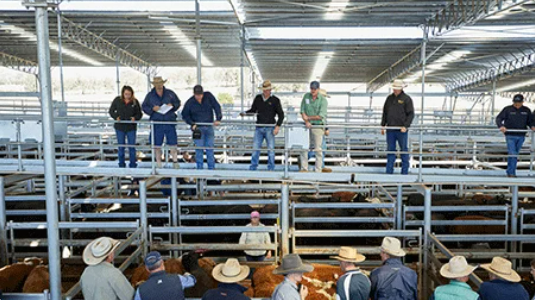
澳大利亚肉类与畜牧业协会(MLA)最新发布的年度交易市场调查报告显示,2025–26财年,澳大利亚牲畜交易市场的肉牛交易量上涨7.4%,绵羊交易量下降11.6%。
这份由MLA全国畜牧报告服务中心(NLRS)开展的调查记录,在截至2026年6月30日的财年内,澳洲各地交易市场共完成超518万头肉牛、1450万只绵羊交易。
和2024–25财年相比,肉牛交易量增加35.6万头以上,绵羊交易量减少约190万只。
MLA全国畜牧报告服务中心负责人斯蒂芬妮·皮特表示,这份年度调查报告直观反映了牲畜在澳洲交易市场的流通情况,体现出各州、不同畜种交易活跃度的明显差异。
“最新数据显示,澳洲肉牛和绵羊交易市场走势分化:多个核心肉牛产区交易量上升,而全国大部分地区的绵羊上市量有所回落。”皮特女士说。
“交易市场依旧是澳洲畜牧营销体系里重要的一环,这份年度报告有助于深入了解不同地区、各交易中心的交易量变化趋势。”
新州、昆州肉牛交易量走高
新南威尔士州与昆士兰州是肉牛交易增量主力,同比分别上涨19.8%和21.6%。
新南威尔士州仍是澳大利亚肉牛场内交易量最高的州,27家上报交易市场合计成交217万头;昆士兰州紧随其后,23家市场合计成交165万头。
昆士兰州罗马牲畜交易市场为全国单市场肉牛吞吐量之首,成交362051头,同比上涨21.5%。
新州的达博区域牲畜市场肉牛交易量313565头,涨幅31.8%;塔姆沃思区域牲畜交易所上涨38.1%,至241244头。
其他各州方面,维多利亚州肉牛交易量下滑19%,西澳下滑17.7%,南澳下滑16.1%;塔斯马尼亚州上涨5.5%。
东部各州绵羊场内交易量下滑
全国绵羊场内交易量降至1450万只,多数州均出现下滑。
新南威尔士州依旧是绵羊交易量最高的州,成交866万只,同比下降6.5%。
在绵羊交易主产州中,维多利亚州降幅最大,交易量下跌25.3%至361万只;南澳大利亚州下降25%,至722937只。
西澳大利亚州为唯一例外,卡坦宁和穆奇亚市场上市量提升带动绵羊交易量上涨19%,达到128万只。
沃加沃加畜牧交易中心仍是澳大利亚规模最大的绵羊交易市场,成交227万只;其次是福布斯中西部牲畜交易所,交易量186万只。
“数据表明,不同地区的场内交易行情差异显著,这也凸显行业持续稳定、可靠数据统计的重要性。”皮特女士表示。
依托全国畜牧报告服务中心(NLRS),MLA持续提供透明的畜牧市场信息,助力养殖户及行业各方掌握市场动态、科学决策。
消息来源:MLA
Cattle saleyard transactions rise as sheep volumes decline in 2025–26: NLRS Saleyard Survey
Cattle transactions at Australian saleyards increased by 7.4% in 2025–26, while sheep transactions declined by 11.6%, according to the latest annual Saleyard Survey released by Meat & Livestock Australia (MLA).
The survey, conducted by MLA’s National Livestock Reporting Service (NLRS), recorded more than 5.18 million cattle and 14.5 million sheep transactions across Australian saleyards in the financial year ending 30 June 2026.
Cattle transactions increased by more than 356,000 head compared with 2024–25, while sheep transactions declined by approximately 1.9 million head.
MLA’s NLRS Manager, Stephanie Pitt said the annual survey provided an important snapshot of livestock movements through Australia's saleyards, highlighting significant differences in activity between states and livestock categories.
“The latest results show contrasting trends across Australia's cattle and sheep saleyards, with increased cattle transactions in several key producing states alongside reduced sheep throughput across much of the country,” Ms Pitt said.
“Saleyards remain an important part of Australia's livestock marketing system, and the annual survey provides valuable insights into how transaction volumes are changing across different regions and selling centres.”
Cattle transactions strengthen in NSW and Queensland
New South Wales and Queensland led the increase in cattle saleyard transactions, recording year-on-year growth of 19.8% and 21.6% respectively.
NSW remained Australia's largest state for cattle saleyard transactions, with 2.17 million head passing through 27 reported facilities, followed by Queensland with 1.65 million head across 23 facilities.
Roma Saleyards in Queensland recorded the highest individual cattle throughput nationally, with 362,051 head, an increase of 21.5% year-on-year.
In NSW, Dubbo Regional Livestock Market recorded 313,565 cattle transactions, up 31.8%, while Tamworth Regional Livestock Exchange increased 38.1% to 241,244 head.
Elsewhere, cattle transactions declined by 19% in Victoria, 17.7% in Western Australia and 16.1% in South Australia, while Tasmania recorded a 5.5% increase.
Sheep saleyard volumes decline across eastern states
National sheep saleyard transactions fell to 14.5 million head, with declines recorded across most states.
NSW remained the largest state for sheep saleyard transactions, recording 8.66 million head, down 6.5% year-on-year.
Victoria recorded the largest proportional decline among the major sheep saleyard states, with transactions falling 25.3% to 3.61 million head, while South Australia experienced a 25% reduction to 722,937 head.
Western Australia was the exception, recording a 19% increase in sheep transactions to 1.28 million head, supported by increased throughput at Katanning and Muchea.
Wagga Wagga Livestock Marketing Centre remained Australia's largest sheep selling centre, recording 2.27 million transactions, followed by Central West Livestock Exchange at Forbes with 1.86 million head.
“The results demonstrate that saleyard activity can vary considerably between regions, reinforcing the importance of having reliable and consistent reporting across the industry,” Ms Pitt said.
“Through the NLRS, MLA continues to provide transparent livestock market information that helps producers and other industry participants understand market activity and make informed decisions.”
Source:MLA

