

核心要点
羊肉行业市场景气指数升至84,86%养殖户持乐观预期。
羊毛行业景气度迎来大幅反弹,大涨80点至45。
市场乐观情绪带动养殖户计划扩大基础繁殖羊群规模。
澳大利亚绵羊养殖户迎来2026年下半年,行业乐观情绪创下景气度追踪统计以来新高。最新《绵羊养殖户意向调查报告》显示,羊肉与羊毛两大板块同步呈现强劲乐观预期,这是该调查开展以来首次出现此种情况。
2026年5月调研数据显示,全国羊肉行业净景气指数为84,较2025年5月上升32点,较2025年10月上涨6点。受访养殖户中高达86%对行业前景持乐观态度,仅2%看空后市。
这份信心源于市场行情向好,各大活畜交易市场羔羊与成年羊肉价格持续高位运行:重型羔羊胴体售价超1000美分/公斤,成年羊肉价格突破900美分/公斤。此前两年全国降水偏少,如今南部产区气候条件明显改善,也进一步提振养殖户信心。
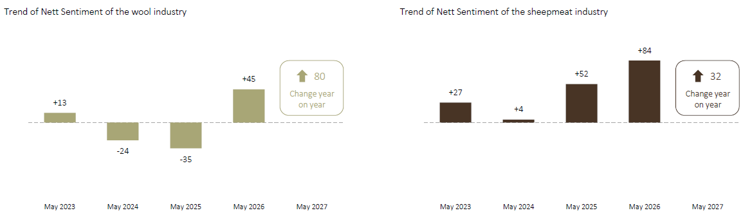
羊毛板块景气度同样带动全行业信心回升。历经数年低迷预期后,羊毛行业净景气指数攀升至45,较2025年5月大幅上涨80点。超半数养殖户(52%)对未来12个月羊毛产业前景持乐观态度。
行情回暖主要得益于羊毛价格走强,过去18个月羊毛价格累计上涨57%,当前价格创下七年新高。
羊肉、羊毛两大板块同步迎来乐观行情,有望推动养殖户重新提升存栏保有意愿,并加大牧场生产投入。
羊群规模恢复提上日程
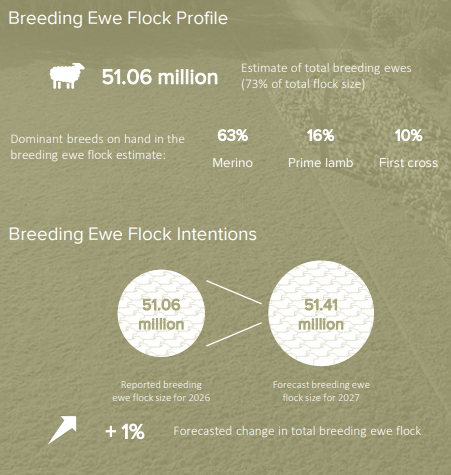
高涨的市场信心直接体现在养殖户对未来羊群规模的规划上。全国基础繁殖母羊存栏量预估为5106万头,养殖户预计未来12个月小幅增养约1%,新增母羊35万头;与去年同期预计存栏缩减9%形成鲜明反转。
阉公羊存栏的回暖态势更为突出。当前阉公羊存栏585万头,预计增幅达10%,而2025年5月的预测为存栏下滑11%。多轮调查以来,计划扩充阉公羊存栏的养殖户数量首次超过打算缩减存栏的群体,昆士兰州、南澳大利亚州与新南威尔士州将成为存栏增长主力区域。
各品种饲养占比基本保持稳定
美利奴羊仍是全国羊群核心品种,占繁殖母羊总量63%、阉公羊总量87%。西澳、新南威尔士州与昆士兰州养殖户饲养美利奴羊的比例显著高于全国平均水平。
优质羔羊杂交种、一代杂交母羊在母羊群中保有稳定占比,维多利亚州与塔斯马尼亚州尤为突出。国内庞大的美利奴基础种群叠加养殖户发展肉毛兼用养殖的意愿提升,助力行业同步把握羊毛与羊肉两大市场的行情红利。
气候与养殖成本仍是养殖户首要顾虑
尽管行业前景向好,但养殖户仍清楚现存各类挑战。在被问及未来半年影响牧场经营决策的核心因素时,56%受访者首选气候与季节性环境;其次是饲草供给(31%),以及燃油、肥料等养殖投入成本。外部环境同样备受关注,政府政策与监管条例也是养殖户重点担忧的问题。
信息来源:澳大利亚肉类与畜牧业协会(MLA)高级市场信息分析师 埃米利亚诺·迪亚兹
本文数据与内容截至2026年7月17日撰写时准确有效
澳大利亚肉类及畜牧业协会(MLA)不对本刊物所载任何信息的准确性、完整性及时效性作出任何保证。用户使用或依赖本刊物任何内容,风险自行承担;因使用或依赖相关信息所造成的任何损失与损害,MLA概不承担任何责任。未经MLA事先书面许可,本刊物任何内容不得擅自转载、复制。凡使用MLA刊物、报告及相关信息,均须遵守MLA市场报告及信息使用条款。
消息来源:MLA
Is aligned sentiment in sheepmeat and wool signaling a turning point?
Key points
Sheepmeat sentiment hits +84, with 86% of producers holding a positive outlook.
Wool sentiment has recorded its sharpest turnaround, rising 80 points to +45.
Positive sentiment is translating into producers' intentions to expand breeding flock numbers.
Australian sheep producers are entering the second half of 2026 with a level of optimism not seen since sentiment tracking began. The latestSheep Producers Intentions Survey(SPIS) shows both the sheepmeat and wool sectors recording strong positive sentiment simultaneously for the first time in the survey’s history.
The May 2026 results reveal a national net sentiment of +84 for sheepmeat, up 32 points from May 2025 and six points from October 2025. An overwhelming 86% of surveyed producers surveyed hold a positive outlook for the sector, compared with just 2% who are negative.
This confidence reflects strong market conditions and what producers are seeing in saleyards, with sustained high prices for both lamb and mutton. Heavy lamb and mutton are trading above 1,000¢/kg and 900¢/kg, respectively. After two years of below-average rainfall, improved seasonal conditions, particularly across southern regions, have also contributed to the lift in confidence.
Wool sentiment is also supporting optimism across the industry. After several years of subdued outlook, net sentiment for wool has climbed to +45, a remarkable 80-point increase since May 2025. More than half of producers (52%) now hold a positive view of the sector's prospects over the next 12 months.
This improvement has been underpinned by wool prices, which have risen 57% over the past 18 months and are currently sitting at a seven-year high.
With both sectors now reporting strong positive sentiment, the outlook is likely to translate into renewed confidence in flock retention and on-farm investment.
Flock rebuild on the cards
The strong confidence is translating into producers’ intentions for future flock numbers. The national breeding ewe flock is estimated at 51.06 million head, with producers forecasting modest growth of around 1%, or an extra 350,000 ewes, over the coming 12 months. This marks a sharp reversal from the 9% contraction forecast at this time last year.
The turnaround is even more pronounced in the wether flock. Estimated at 5.85 million head, wether numbers are forecast to grow by 10%, compared with an 11% decline predicted in May 2025. Producers intending to increase wether numbers now outnumber those planning reductions for the first time in several surveys, with Queensland, SA and NSW leading the anticipated growth.
Breed mix holds relatedly steady
Merinos remains the backbone of the national flock, accounting for 63% of breeding ewes and 87% of wethers. Producers in WA, NSW and Queensland carry a notably higher proportion of Merinos than the national average.
Prime lamb and first-cross breeds continue to hold a strong position in the ewe flock, particularly across Victoria and Tasmania. This enduring Merino base, paired with growing dual-purpose production intentions, positions the industry well to capitalise on strength in both wool and sheepmeat markets at the same time.
Weather and input costs still front of mind
Despite the improved outlook, producers haven't lost sight of ongoing challenges. When asked what will shape their on-farm decisions over the next six months, weather and seasonal conditions dominated responses (56%), followed by feed availability (31%) and input costs, particularly fuel and fertiliser. Off-farm factors were also front of mind, with government policy and regulation also featured prominently in producer feedback.
Attribute content to: Emiliano Diaz, MLA Senior Market Information Analyst.
Information is correct at time of writing on 17 July 2026.
MLA makes no representations as to the accuracy, completeness or currency of any information contained in this publication. Your use of, or reliance on, any content is entirely at your ownrisk and MLA accepts no liability for any losses or damages incurred by youas a result of that use or reliance. No part of this publication may be reproduced without the prior written consent of MLA. All use of MLA publications, reports and information is subject to MLA’s Market Report and Information Terms of Use.
Source:MLA

