

核心要点
2026年,柴油价格波动给肉牛整条供应链带来成本压力。
燃油成本上涨或在短期内影响采购活跃度,但长期来看,它并非肉牛价格的核心驱动因素。
自2026年2月下旬霍尔木兹海峡局势扰动以来,全球柴油价格剧烈波动,推高了养殖户、育肥场、屠宰加工企业以及运输商的经营成本。
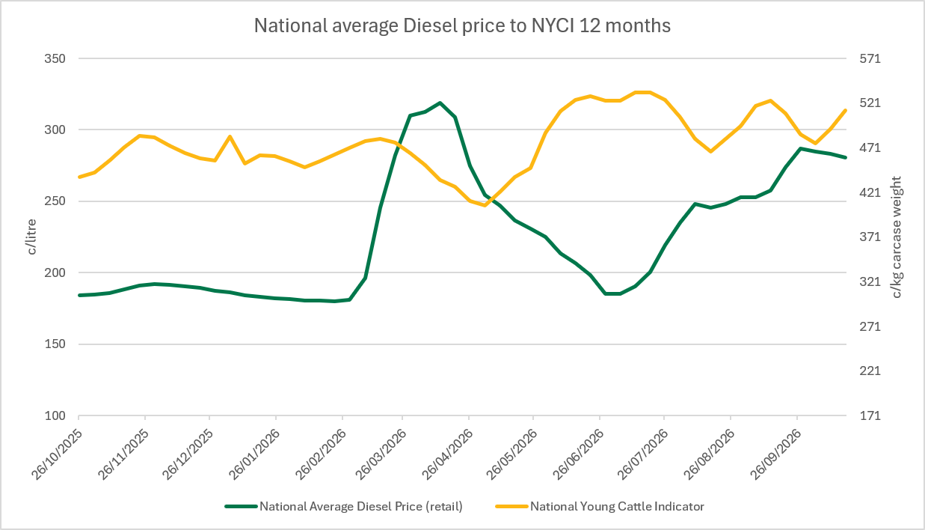
过去12个月,澳大利亚全国柴油零售价区间为:2026年2月22日当周的180澳分/升,至2026年4月12日当周峰值319澳分/升,涨幅达77%。
在犊牛市场,油价首轮冲击恰逢昆士兰州南部与新南威尔士州北部肉牛集中出栏期。
3月、4月出栏量为本年度最高的两个月,分别达到40.9万头与36.7万头。大量牛只涌入市场,因此很难单独剥离柴油价格的影响,区分开油价因素与整体供给带来的市场压力。
资料来源:澳大利亚肉类与畜牧业协会(MLA)、澳大利亚石油协会
2026年7月起柴油价格迎来第二轮持续性上涨,本次油价走势与全国犊牛指标(NYCI)呈现出更为明显的关联。
柴油价格从7月5日当周的185.5澳分/升,上涨至9月27日当周的286.7澳分/升。同期,全国犊牛指标下跌7%。
这一现象说明燃油涨价或许打击了采购信心、抑制出价,但油价并非影响市场的唯一因素。季节环境、肉牛供需仍发挥着重要作用。
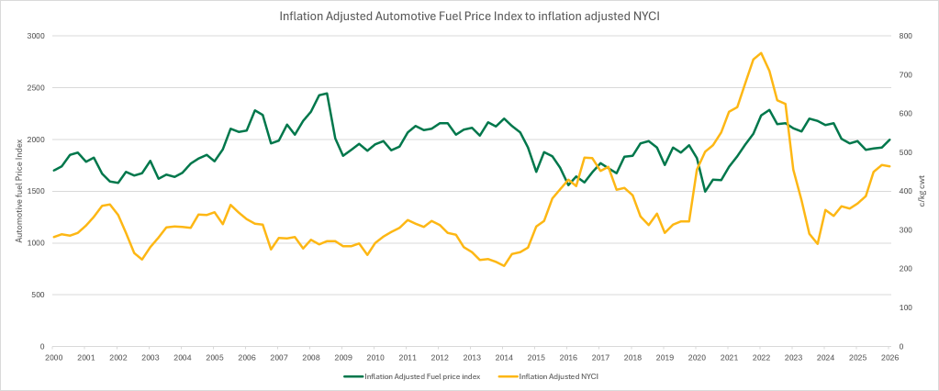
拉长时间维度来看,燃油价格与肉牛价格的相关性整体偏弱。对比2000年至2026年3月季度经通胀调整后的燃油价格与全国犊牛指标,二者不存在稳定联动关系。
举例来说,2008年实际燃油价格冲高,但犊牛价格相对低迷。与之相反,2022年初即便油价上行,剔除通胀后的全国犊牛指标仍创下757澳分/公斤活重的历史高点。同样,2023年肉牛价格大幅下跌,而燃油价格保持相对平稳。
资料来源:澳大利亚肉类与畜牧业协会(MLA)、澳大利亚统计局(ABS)
总体而言,燃油只是影响短期市场情绪和采购能力的众多因素之一。季节气候、饲草供给以及牛群周期才是肉牛价格的核心驱动因素。
对养殖户、育肥场和加工企业来说,2026年油价波动带来的主要影响是运营成本上升,本就微薄的产业链利润空间进一步承压。
内容供稿:澳大利亚肉类与畜牧业协会市场信息分析师 亚历克斯·弗莱
信息截至2026年10月23日发布时准确无误。
澳大利亚肉类与畜牧业协会(MLA)不对本刊物所载任何信息的准确性、完整性及时效性作出任何保证。用户使用或依赖本刊物任何内容,风险自行承担;因使用或依赖相关信息所造成的任何损失与损害,MLA概不承担任何责任。未经MLA事先书面许可,本刊物任何内容不得擅自转载、复制。凡使用MLA刊物、报告及相关信息,均须遵守MLA市场报告及信息使用条款。
消息来源:MLA
How has fuel price volatility affected cattle markets in 2026?
Key points
Diesel price volatility has added cost pressure across the cattle supply chain in 2026.
Higher fuel costs may influence buying activity in the short term, but they are not a major driver of cattle prices over the long term.
Since disruptions to the Strait of Hormuz began in late February 2026, global diesel prices have been highly volatile, increasing costs for producers, lot feeders, processors and transport operators.
Over the past 12 months, national retail diesel prices ranged from 180¢/litre in the week ending 22 February 2026 to a peak of 319¢/litre in the week ending 12 April 2026, an increase of 77%.
For the young cattle market, the initial fuel price shock coincided with a period of strong cattle turn-off across southern Queensland and northern New South Wales.
March and April recorded the year’s two highest monthly throughput figures, at 409,000 and 367,000 head respectively. With such large numbers of cattle entering the market, it is difficult to separate the impact of diesel prices from broader supply-driven market pressures.
Source: MLA, Australian Institute of Petroleum
A second, more sustained rise in diesel prices from July 2026 showed a stronger relationship with the National Young Cattle Indicator (NYCI).
Diesel prices increased from 185.5¢/litre in the week ending 5 July to 286.7¢/litre in the week ending 27 September. Over the same period, the NYCI fell by 7%.
While this suggests higher fuel prices may have weighed on buying confidence and bidding activity, they were not the only factor influencing the market. Seasonal conditions, cattle supply and demand continued to play a significant role.
Looking over a longer time frame, the relationship between fuel and cattle prices remains relatively weak. Comparing inflation-adjusted fuel prices with the inflation-adjusted NYCI from 2000 to the March 2026 quarter shows little consistent connection between the two.
For example, real fuel prices reached a peaked in 2008 when young cattle prices were relatively subdued. Conversely, the inflation-adjusted NYCI reached a record 757¢/kg liveweight in early 2022 despite rising fuel costs. Similarly, cattle prices fell sharply during 2023 while fuel prices remained comparatively stable.
Source: MLA, ABS
Overall, fuel is one of many factors that can influence short-term market sentiment and purchasing capacity. However, seasonal conditions, feed availability and the herd cycle remain the primary driver of cattle prices.
For producers, lot feeders and processors, the main impact of fuel price volatility in 2026 has been increased operating costs and further pressure on already tight margins across the supply chain.
Attribute content to Alex Fry, MLA Market Information Analyst.
Information is correct at time of publication on 23 October 2026.
MLA makes no representations as to the accuracy, completeness or currency of any information contained in this publication. Your use of, or reliance on, any content is entirely at your own risk and MLA accepts no liability for any losses or damages incurred by you as a result of that use or reliance. No part of this publication may be reproduced without the prior written consent of MLA. All use of MLA publications, reports and information is subject to MLA’s Market Report and Information Terms of Use.
Source:MLA

